The May edition of Breakfast4Inno presents a pioneering project that combines precision agriculture and biological control
Red spider mites have become one of the major headaches in corn cultivation, as they can cause significant yield losses. It is estimated that there are currently around 120,000 hectares affected in Catalonia and Aragon, and there is still no truly effective and established solution. In fact, pest control depends almost exclusively on a single plant protection product: Abamectin.
The Agrotecnio – Universitat de Lleida research group in AgròTICa and Precision Agriculture and Livestock Farming (GRAP), together with Agronatur Biocontrol, are working on a new way to combat red spider mites in corn using drones to release phytoseiid mites over the fields. This approach combines biological control and precision agriculture with the aim of reducing dependence on plant protection products and moving towards a more sustainable and environmentally friendly agriculture.
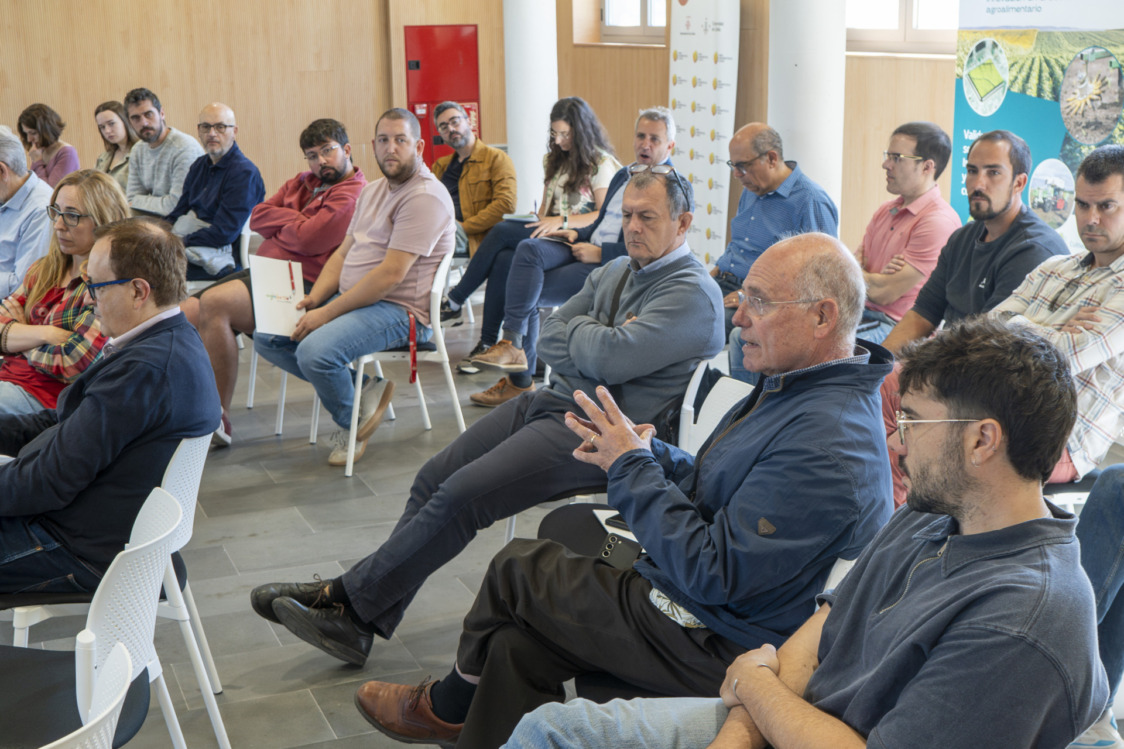
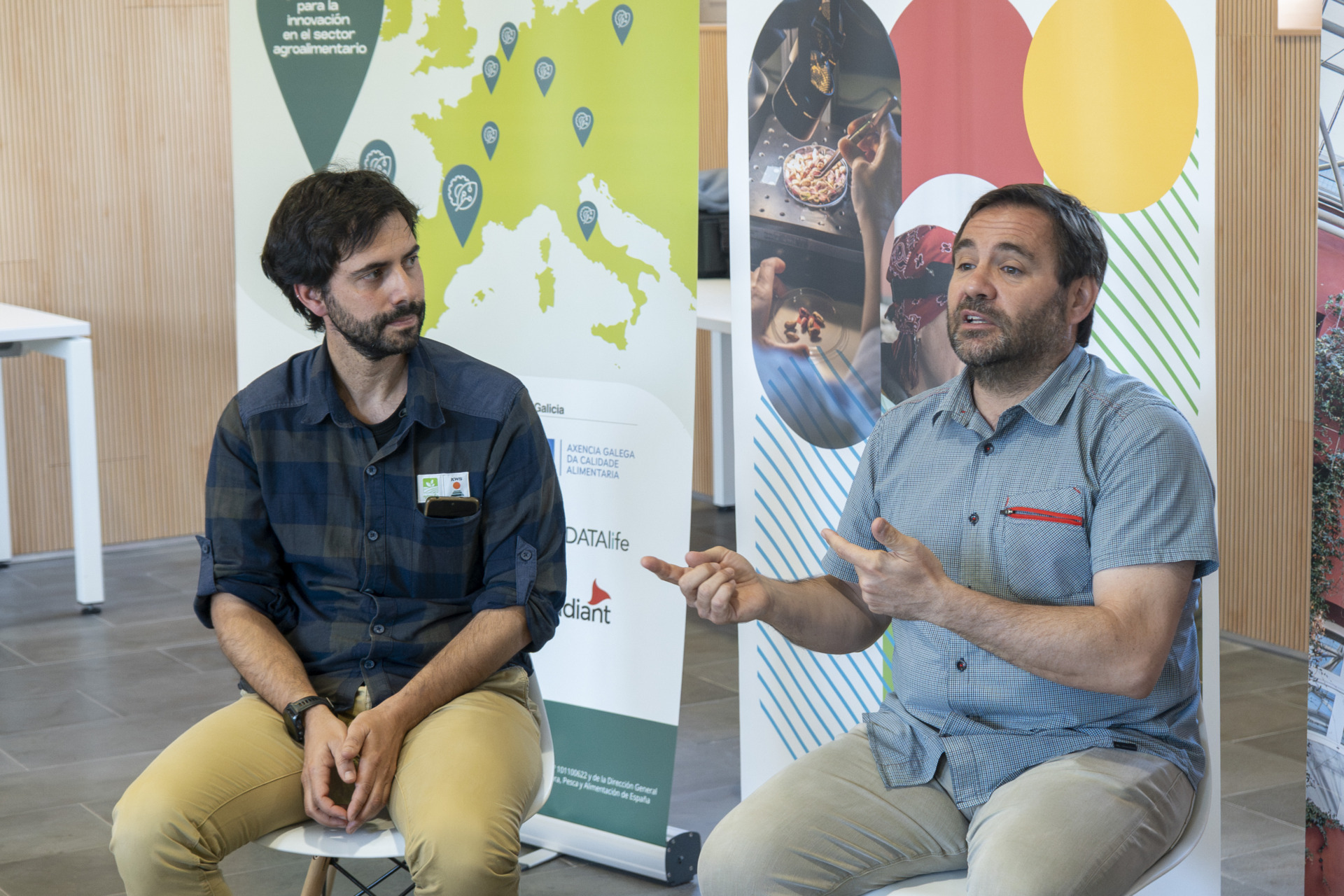
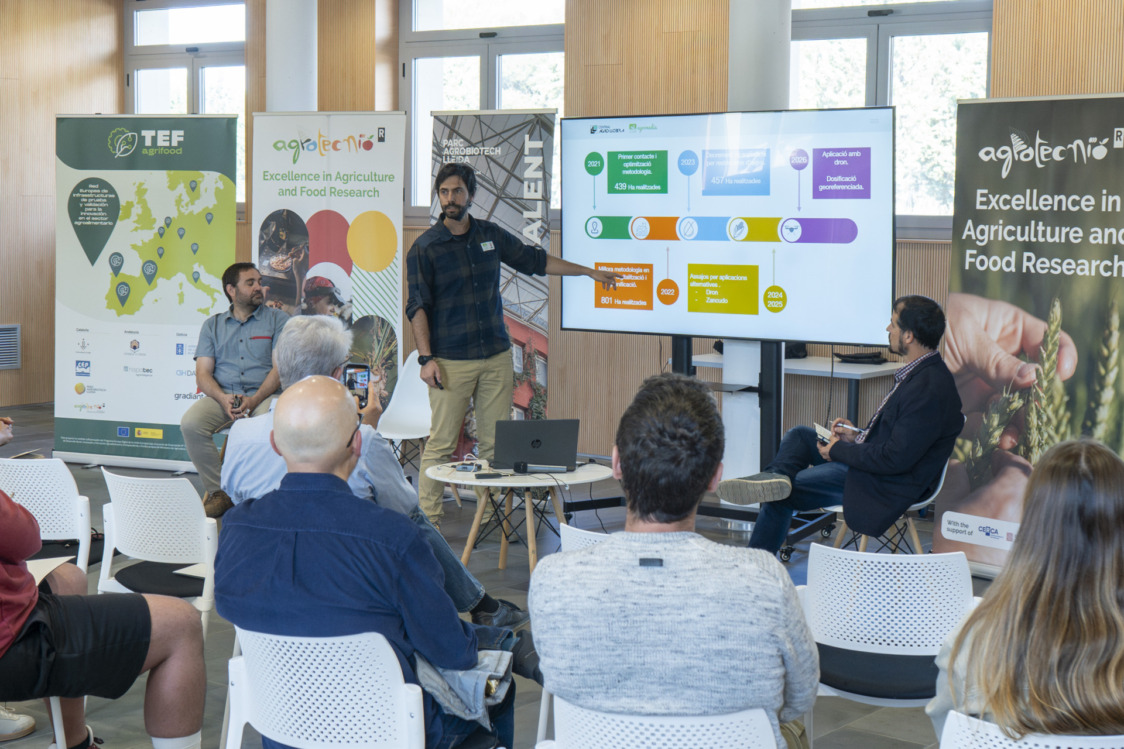
The project was presented during the innovation breakfast Breakfast4Inno, organised by Agrotecnio, the Parc Agrobiotech Lleida and the Diputació de Lleida. The event featured Àlex Escolà, researcher at GRAP, and David Valverde, R&D&I coordinator at Agronatur Biocontrol. The session was moderated by Jordi Llorens, principal researcher at GRAP.
Natural predators released by drones
The project focuses on the biological control of red spider mites through phytoseiid mites, small mites that act as natural predators of the pest. Among the species used are Neoseiulus californicus and Phytoseiulus persimilis, both capable of keeping the pest under continuous control in a crop-friendly and environmentally respectful way.
Until now, these phytoseiids were applied manually by placing small sachets on the stem or along the leaf veins, following field maps and technical criteria. In order to make the system more efficient and viable on a large scale, the project began testing new alternatives in 2025, such as drones and high-clearance vehicles. In 2026, the trials have gone a step further with the application of phytoseiids by drones based on selective dosage criteria, a technology that makes it possible to adjust the release according to the specific needs of each area of the field.
Drones provide highly precise information on crop conditions thanks to multispectral imaging and vegetation indices such as the Normalized Difference Vegetation Index. This technology makes it possible to detect differences within plots and apply treatments only where they are truly needed, enabling a much more efficient and sustainable management of each field.
According to researchers’ estimates, if this technology were expanded to 2,000 hectares, it could achieve an annual reduction of 116.5 tonnes of CO₂ equivalent emissions, save nearly 600,000 litres of water, and reduce the use of plant protection products by 20%. All of this would also help promote biodiversity and reduce the presence of pollutants in the environment.
This work is part of Precision Agriculture, an approach to agricultural management based on the use of data and digital technologies to optimise resource use and make crops more efficient and sustainable. The GRAP group, made up of around twenty researchers and technicians from diverse backgrounds, works in areas such as crop monitoring, remote sensing and variable-rate application of agricultural inputs.