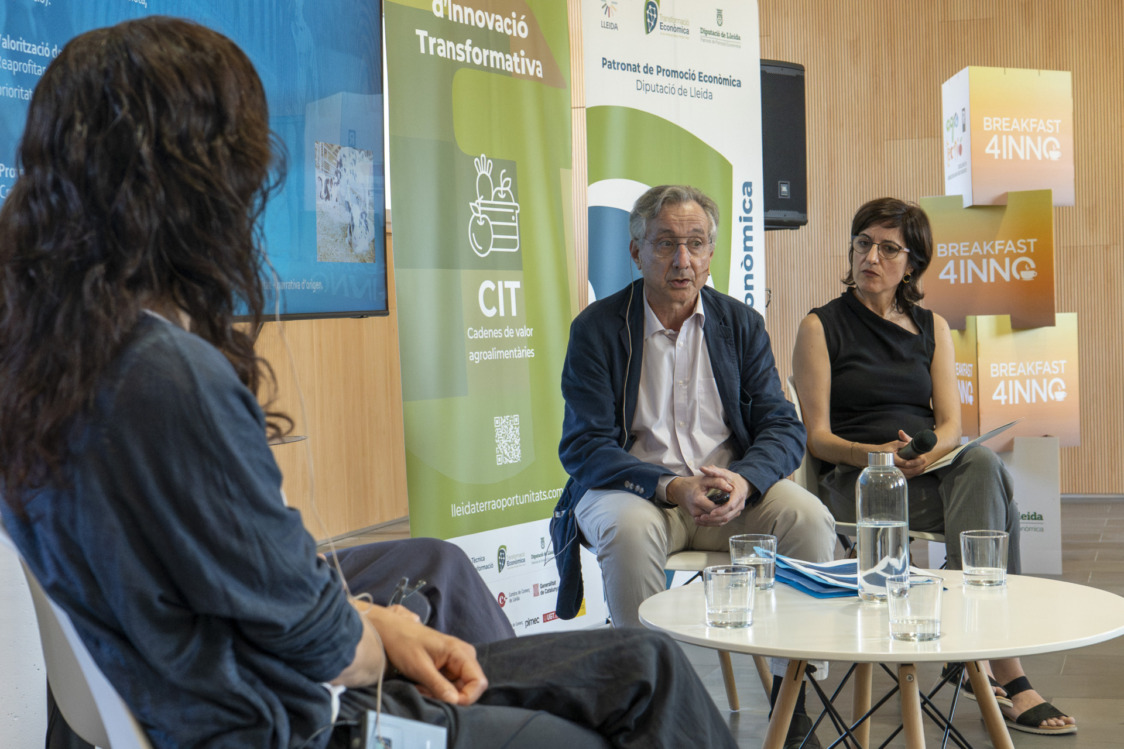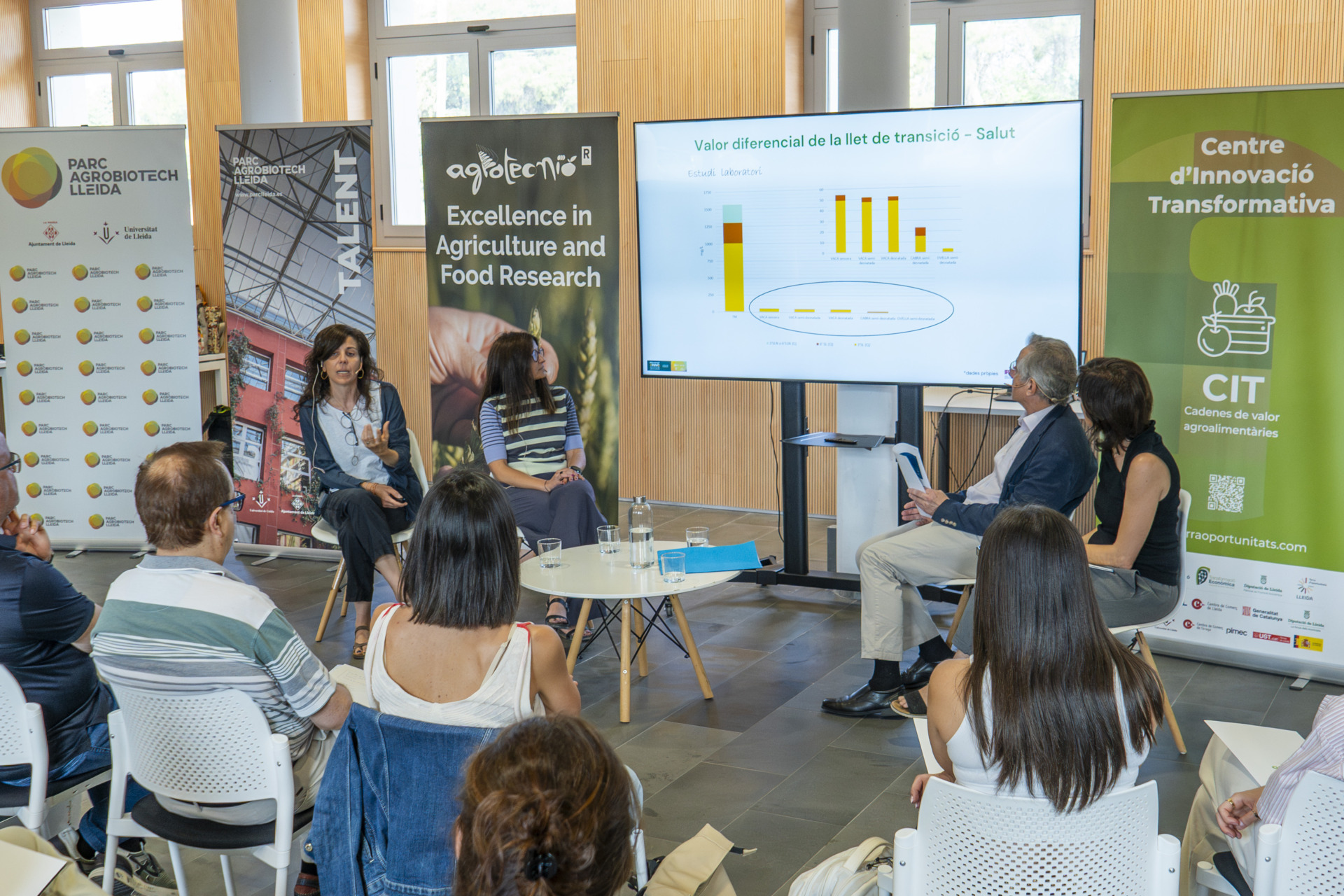
Agrotecnio, the Universitat de Lleida, IRTA and Llet Nostra present a study at Breakfast4Inno assessing the viability of this dairy resource.
Transition milk stands out for its high content of proteins, fats, vitamins, minerals and bioactive compounds, although much of its potential is currently still being underutilized.
Transition milk is the milk produced by the cow in the period between colostrum and mature milk. It is considered transition milk from the second to the eighth milking after calving. It is a resource with high nutritional potential that is currently only minimally used on most farms, where it is often discarded.
Rich in proteins, fats, vitamins, minerals, growth factors and bioactive compounds, this milk could become a new source of high-value ingredients for the food and livestock sectors.
This is the focus of the research and innovation project FerMilk, an initiative bringing together the research centres Agrotecnio, the Universitat de Lleida, the Institute for Research and Technology in Agrifood (IRTA), and the company Llet Nostra, S.L. The project was presented today in a new edition of the Breakfast4Inno series, a monthly meeting space for researchers, companies, public administrations and citizens organized by Agrotecnio, the Parc Agrobiotech and the Provincial Council of Lleida.
FerMilk evaluates the feasibility of transforming transition milk into new functional foods with health-promoting properties, intended for both animal and human nutrition. The project includes active participation from the productive sector, especially Llet Nostra, with the aim of facilitating the transfer of research results and supporting the introduction of these new products to the market.
In addition to generating new economic opportunities for the dairy sector, FerMilk aims to reduce resource waste and promote more sustainable production models based on the principles of bioeconomy and circular economy.
A milk almost as rich as colostrum
IRTA researcher in the Ruminant Production Programme, Elena Garcia, highlighted the value of transition milk, a resource that is often underused but retains many of the beneficial properties of colostrum. During her presentation, she also shared the results of a study carried out with calves fed a combination of colostrum and transition milk, a strategy that could support their health and development during early life stages.
Garcia explained the differences between colostrum, transition milk and conventional tank milk. The analyses show that transition milk maintains a high concentration of bioactive compounds present in colostrum, such as immunoglobulin G (IgG), lactoferrin, insulin-like growth factor 1 (IGF-1) and various oligosaccharides—key substances for the development and protection of newborn animals.
Although these compounds are present at lower concentrations than in colostrum, they are significantly higher than in conventional milk, where they are absent or only found in trace amounts. This profile gives transition milk notable nutritional potential and opens the door to potential applications in animal health and the bioindustry.
In vitro studies and initial animal evaluations indicate that incorporating transition milk into calf feeding could help strengthen the immune system and support gastrointestinal development, particularly during sensitive periods such as the first weeks of life or stressful situations like transport. This evidence reinforces the growing interest in revaluing a product that until recently received little attention.
Innovative technology to add value to transition milk
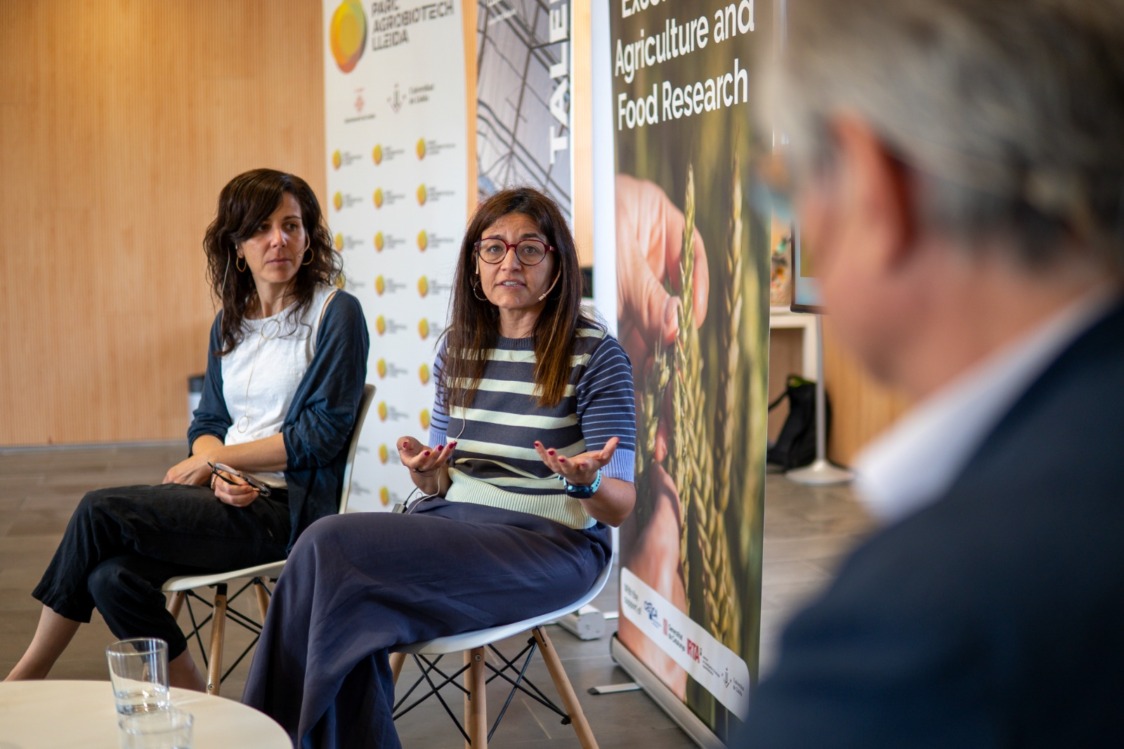
The project is led by Dr. Nadia Ortega, an Agrotecnio researcher specializing in bioactive compounds and innovative food technologies, and professor in the Department of Food Technology, Engineering and Science at the Universitat de Lleida.
According to Ortega, the milk first undergoes several physical treatments such as skimming, pasteurization and high-pressure homogenization to ensure quality and stability. It then undergoes controlled fermentation using selected strains of lactic acid bacteria with probiotic potential, combined with innovative technologies such as high-pressure processing and high-pressure homogenization. These techniques improve microbiological safety and nutritional value while enhancing the milk’s functional properties.
The final goal is to obtain new probiotic and postbiotic products with applications in animal nutrition—especially for ruminants—but also with potential for human food applications. These ingredients could be of interest to people with gut microbiota imbalances, athletes, vulnerable groups, or for the development of personalized nutrition strategies.
A product aligned with market trends
The General Director of Llet Nostra Alimentària, S.L., Gabriel de Mariscal, provided the business perspective of the project and the opportunities this innovation could generate for the dairy sector.
During his presentation, he highlighted that transition milk responds to several growing consumer trends, such as demand for functional foods, high-value ingredients, and solutions related to gut health, physical recovery, and immune system support.
According to De Mariscal, this resource could enable the development of functional ingredients for the food industry, sports nutrition, dietary supplements and infant nutrition, as well as premium fermented products and new postbiotics. At the same time, it would help transform a currently underused resource into a new source of value for dairy farms, strengthening the competitiveness of the sector and generating new business opportunities based on innovation, sustainability and proximity.
The session was moderated by Beatriz Serrano, researcher in the Animal Nutrition and Environment group at Agrotecnio, associate professor at the Universitat de Lleida and head of the Department of Animal Science.
The next edition of the Breakfast4Inno series will take place on July 9 in Tremp, at the headquarters of the Cartographic and Geological Institute of Catalonia, under the title “Pallars olive oil, an opportunity for the region.” It will be the first time the series is held outside the Parc Agrobiotech, with the aim of bringing the debate on innovation and territorial development to other areas of the region.