- Aviño-Calero, J., Santateresa, E., Orden, L., Marks, E. A. N., Martínez-Sabater, E., Andreu-Rodriguez, F. J., Sáez-Tovar, J. A., Pérez-Murcia, M. D., Bustamante, M. Á., & Moral, R. (año). Addition discarded tennis balls as an inert bulking agent to olive mill waste and pig slurry during composting reduces the energy consumption related to ventilation and the generation of anaerobic gases. Centro de Investigación e Innovación Agroalimentaria y Agroambiental (CIAGRO-UMH), Universidad Miguel Hernández, Sociedad de Fomento Agrícola Castellonense S.A. (FACSA), Agrotecnio-CERCA Center.
19/11/2025
Circular economy for discarded tennis balls: adding them to compost reduces emissions and accelerates the decomposition of organic waste
A study by Agrotecnio, FACSA, and the CIAGRO Centre at the Miguel Hernández University of Elche shows that reusing discarded tennis balls improves compost aeration and reduces greenhouse gas emissions.
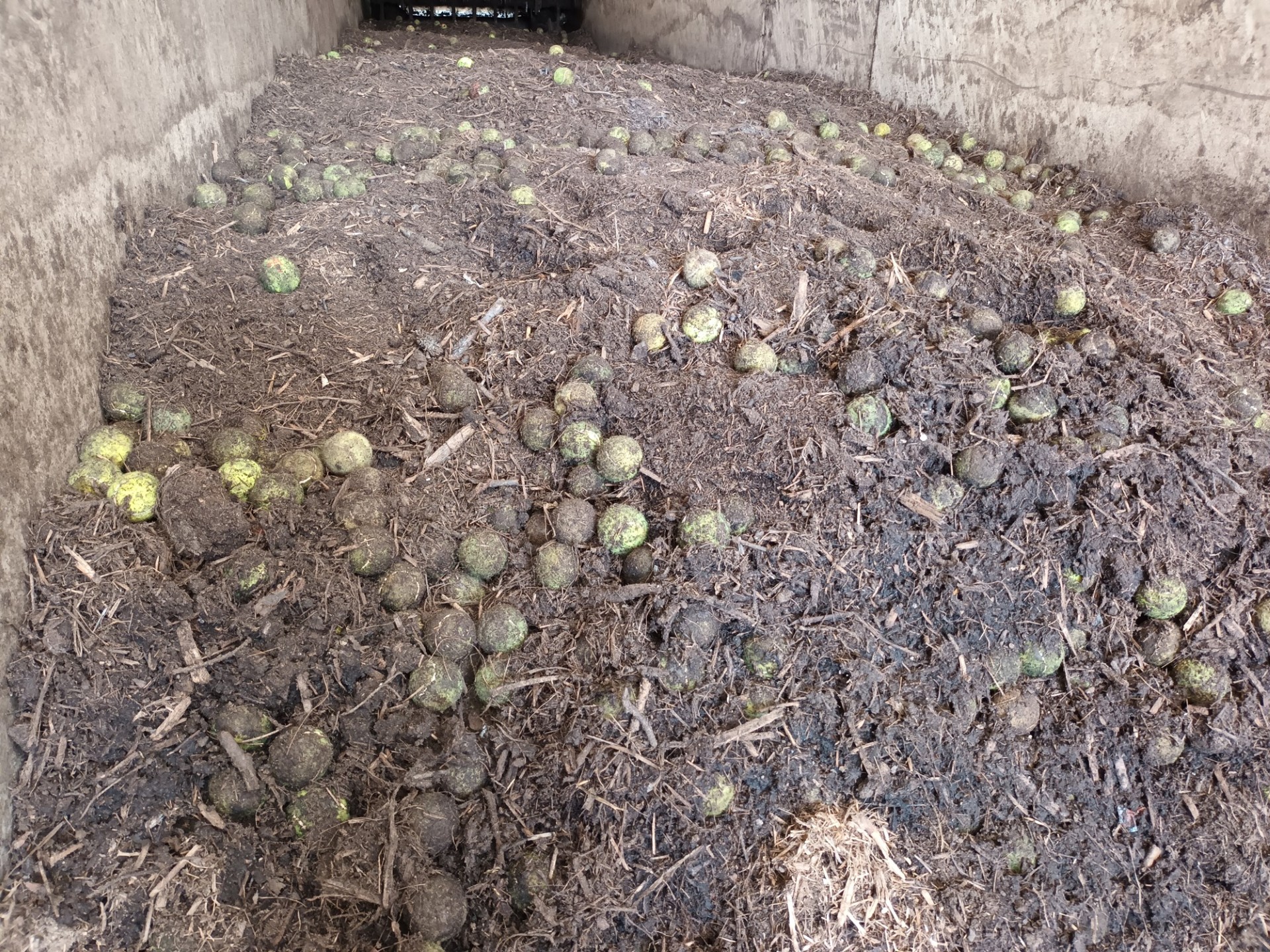
Researchers from the Agrotecnio centre, the Sociedad de Fomento Agrícola Castellonense (FACSA), and the Centre for Agro-Food and Environmental Research and Innovation (CIAGRO) at the Miguel Hernández University of Elche (Alicante) have discovered an innovative way to make industrial composting of organic waste more sustainable: reusing discarded tennis balls.
The study, published in the Journal of Environmental Management, demonstrates that adding 50% of used tennis balls to compost piles significantly improves air circulation and provides several other important benefits.
The researchers conducted four experiments combining compost aeration with the inclusion of the old balls in the mixture. They analysed two types of compost: one made from pig slurry and urban pruning waste, and another that also included olive oil by-products.
The results indicate that the tennis balls increased oxygen concentrations inside the compost by between 35% and 50%, depending on the mixture. They also reduced emissions of ammonia, carbon monoxide, and methane by up to ninefold, and lowered the energy consumption required for forced aeration by between 160 and 546 kWh, avoiding the emission of 31 to 135 kg of CO₂ equivalent.
Compost aerated with this method also showed higher quality: it had a more balanced pH, lower electrical conductivity, reduced polyphenolic compounds, and higher germination indices.
“Tennis balls create small air channels that help keep the compost oxygenated without the need for additional energy,” explains Evan Marks, researcher at Agrotecnio. “It is a very simple yet effective example of circular economy: we give a second life to a difficult-to-recycle waste while reducing greenhouse gas emissions.”
Despite the positive results, Marks notes that “it is still necessary to optimise the amount of tennis balls used according to specific mixtures, materials and seasonal conditions, and to foster synergies with organisations and companies that manage discarded balls.”
J.Aviñó Calero
More information: