
Nieves Escalera, a PhD candidate at the University of Lleida in Agrotecnio’s Animal Nutrition and Environment group, received first prize for the communication of a study on maternal nutrition and metabolic health in cattle. The second prize was awarded to a communication led by Agrotecnio’s Animal Husbandry and Reproduction group in collaboration with IFAPA.
Two research groups from Agrotecnio and the University of Lleida have been recognized for their scientific communications at the 28th International Congress on Bovine Medicine, organized by the National Association of Specialists in Bovine Medicine (ANEMBE), held from May 20 to 22 in Valladolid. The awardees are Nieves Escalera, a PhD candidate at the University of Lleida and member of Agrotecnio’s Animal Nutrition and Environment group, and Inmaculada Cuevas from the Andalusian Institute of Agricultural and Fisheries Research and Training (IFAPA), for her communication based on work led by Agrotecnio’s Animal Husbandry and Reproduction group.
Escalera received first prize for her study “Undernutrition and hydroxytyrosol supplementation at the end of gestation in beef cows affect the fatty acid profile of the offspring.” The work, presented by Javier Álvarez from the School of Engineering and Architecture of Huesca and also involving Agrotecnio and UdL researcher Beatriz Serrano, analyzes how maternal nutrition during the last third of gestation influences lipid metabolism and fatty acid composition in beef cattle offspring. It also evaluates the potential beneficial effects of hydroxytyrosol supplementation, a phenolic compound derived from olives, in mitigating alterations associated with maternal undernutrition.
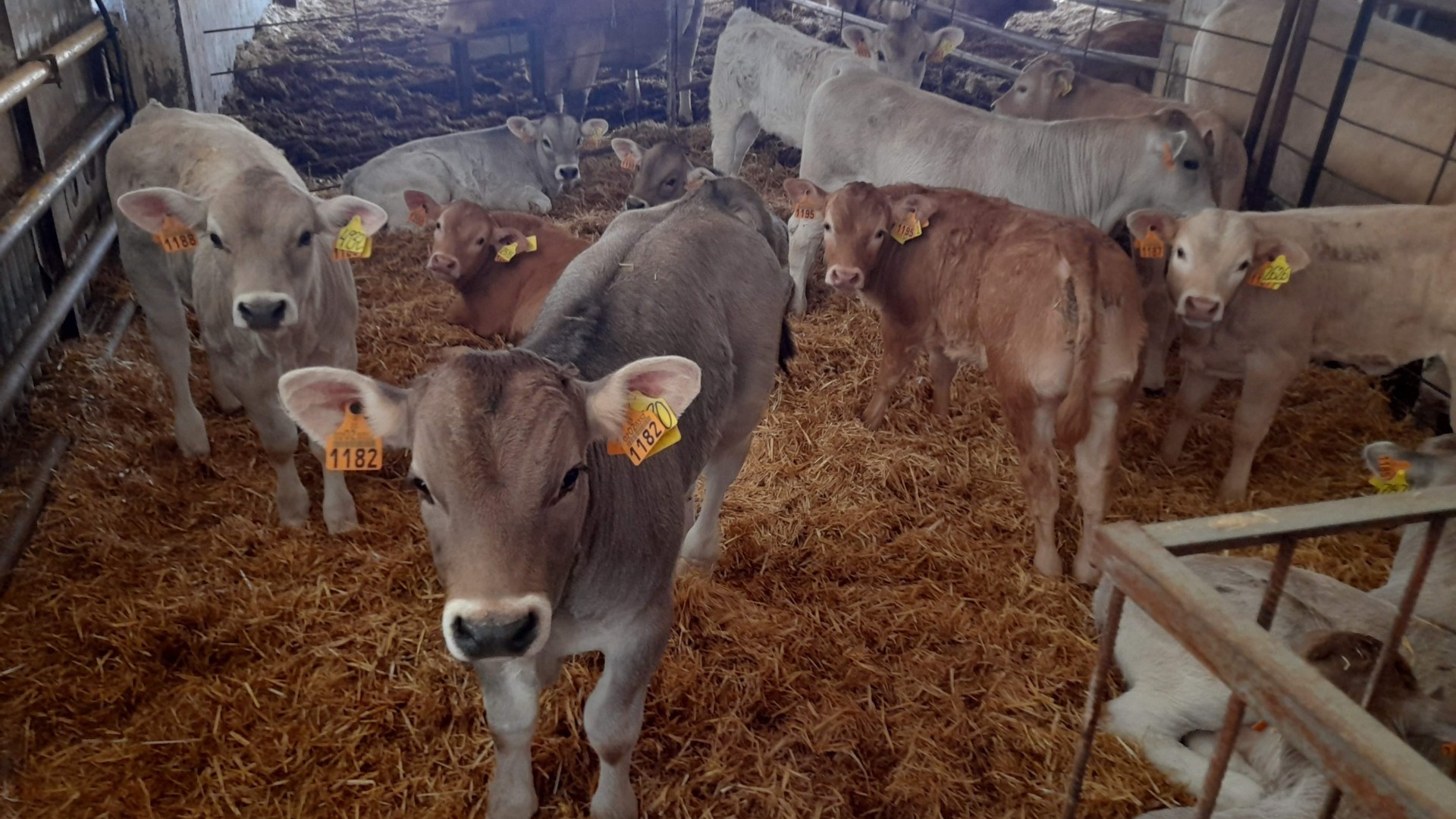
The results show that undernutrition during gestation alters the lipid profile of offspring at one year of age, while hydroxytyrosol supplementation can partially modulate these effects.
This study represents the final chapter of Nieves Escalera’s doctoral thesis, currently in its final stages, and is part of the FETALNUT project, coordinated by researchers Albina Sanz (CITA Aragón) and Beatriz Serrano (Agrotecnio–UdL). FETALNUT is funded by the Spanish State Research Agency (AEI) under the Ministry of Science, Innovation and Universities, within the coordinated project calls “Knowledge Generation” and “Research Challenges” (2021–2024).
The second prize for best scientific communication was awarded to the study “Strategic administration of human chorionic gonadotropin (hCG) in high-producing dairy cows under heat stress to improve fertility at first postpartum insemination,” presented by researcher Inmaculada Cuevas (IFAPA). This work was led by researcher Eber Rojas and involved Iris Cuchí, both affiliated with the University of Lleida and Agrotecnio.
The study addresses low fertility in high-producing dairy cows, a problem that affects farm profitability and is often associated with suboptimal progesterone concentrations after ovulation. This hormone is essential for the establishment and maintenance of pregnancy in mammals. Progesterone is secreted by the corpus luteum, a structure that forms in the ovary after ovulation. The administration of human chorionic gonadotropin (hCG), a hormone produced by women during early pregnancy, can increase progesterone levels by enlarging the corpus luteum or inducing the formation of an accessory one.
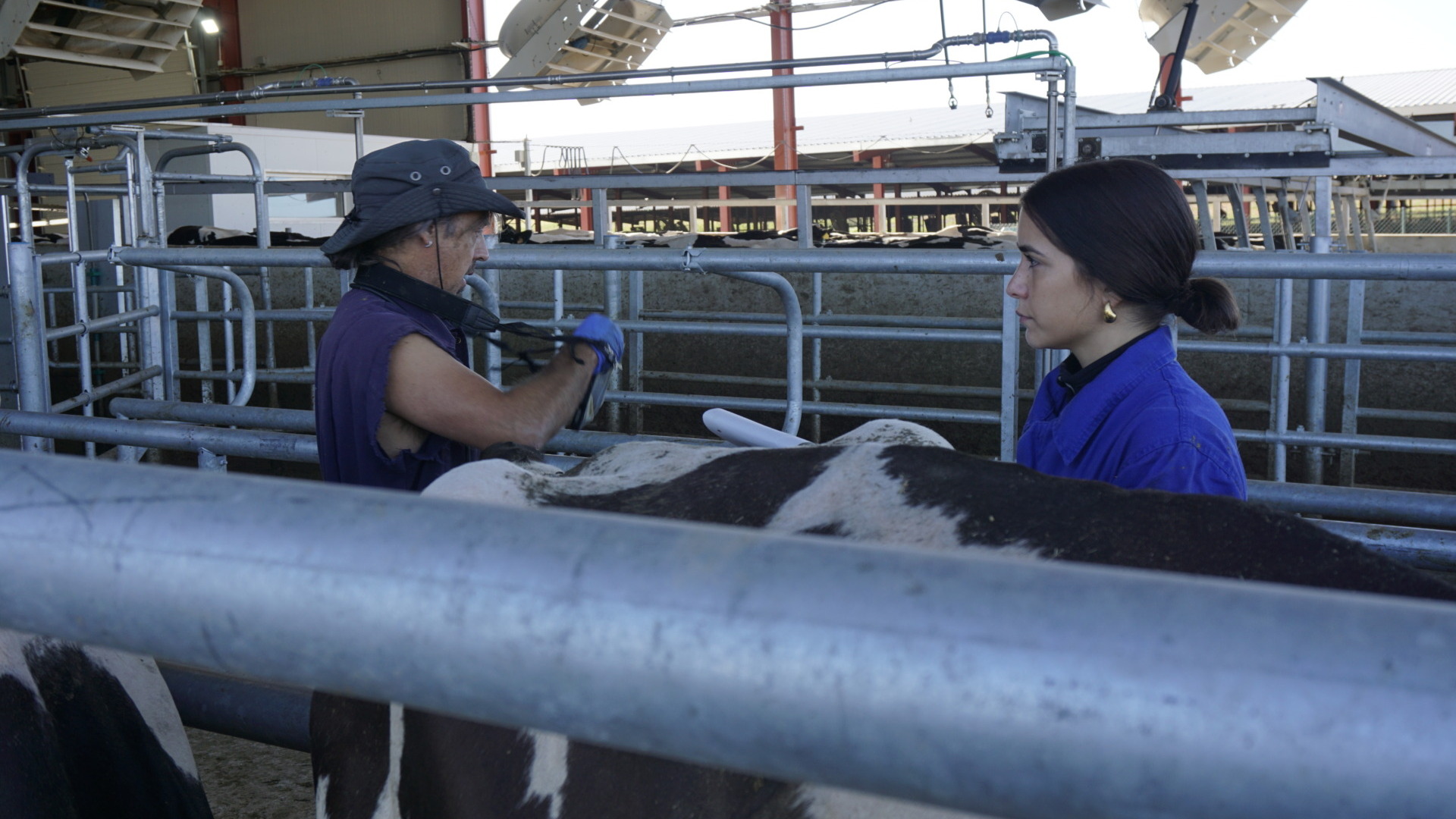
The study included 522 Holstein cows from five Spanish farms exposed to heat stress during the summer. The results showed that strategic administration of hCG increased the total size of luteal tissue and promoted the formation of accessory corpora lutea, indicating a greater capacity for progesterone production. This effect translated into a significant improvement in fertility: pregnancy rates after the first artificial insemination increased by 11% in treated cows. The improvement was observed in both younger and older animals when treatment was applied at the optimal time for each group (day 2 after first insemination in cows with three or more lactations, and day 5 after first insemination in those with fewer than three lactations). These findings suggest that the strategic use of hCG could become an effective tool to improve reproductive efficiency in dairy cows during periods of heat stress.