-
-
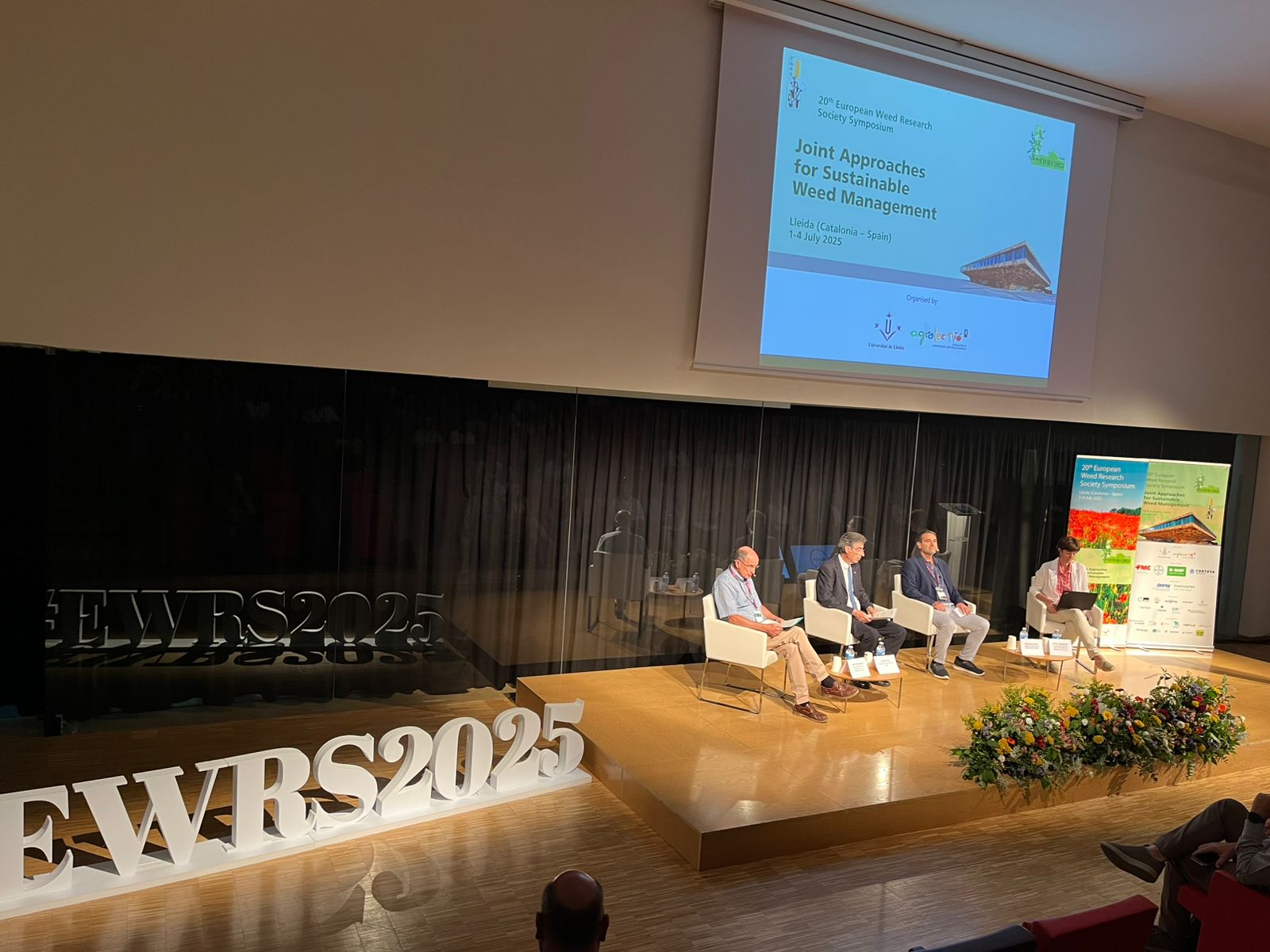
The European Weed Research Symposium (EWRS), held this week in Lleida, brings together more than 350 international scientists to discuss the future of sustainable weed control
The 20th Symposium of the European Weed Research Society (EWRS), which concludes tomorrow at La Llotja in Lleida, has turned the city into the international epicentre of scientific debate on sustainable weed control, one of the silent but growing threats to the viability of many crops.
Over four days, more than 350 scientists from 40 countries have shared over 300 scientific communications with a common goal: to improve weed management in order to guarantee the profitability and sustainability of agricultural systems. And they have done so with an important premise: the need to integrate agronomic, ecological and social knowledge.As explained by Jordi Recasens, professor at the University of Lleida, researcher at Agrotecnio and president of the organising committee, “the study of weed management is adopting new approaches. Traditional control of unwanted weeds must be combined, depending on the crop, with the management of species that can bring benefits to the system, such as preventing soil erosion or supporting the presence of pollinators. To meet this challenge, only research can provide the right answers.”
The case of Amaranthus palmeri: a silent threat
One of the cases analysed during the congress is Amaranthus palmeri, an invasive species of American origin that already infests hundreds of hectares of maize in Lleida, Huesca and Extremadura. This plant can grow over two metres tall and produce up to 600,000 seeds per specimen, an exceptional reproductive capacity that is aggravated by its high resistance to herbicides.In Spain, it is believed to have arrived through imports of grain and flour for animal feed, and it has found an ideal environment for its expansion in maize fields. According to data from the Plant Health Service of the Government of Catalonia, in 2024 there were already more than 2,500 hectares affected in Catalonia.
To tackle this challenge, the crop protection research group at Agrotecnio and the University of Lleida leads the thematic network PalmerNET, made up of four research centres and four universities working together to curb the spread of this species.
As Joel Torra, researcher at Agrotecnio and UdL, points out, “addressing this issue is an urgent need of the agricultural sector, which until now had not been approached systematically. The first studies in Europe that aim to clarify how this species enters and the routes by which it spreads are being presented at this symposium.”
Artificial intelligence, regenerative agriculture and new approaches
The EWRS congress has also been the venue for the presentation of technological and agroecological solutions to meet these new challenges. Among the highlighted proposals are the application of artificial intelligence to detect infestations and apply targeted treatments, regenerative agriculture practices that integrate weeds as part of the system, and research into herbicide resistance, which is becoming increasingly frequent and difficult to manage.
With this symposium, Lleida consolidates itself as a scientific reference in weed science and plant ecology. -
03/07/2025