A study by Agrotecnio and the University of Lleida shows that the timing of a heat wave is key to its impact on yield and that an initial exposure to high temperatures can activate protective mechanisms against subsequent heat episodes
Heat waves occurring before wheat flowering can cause greater yield losses than those taking place after this stage. However, an initial exposure to high temperatures can activate protective mechanisms in the plant that allow it to cope better with a second heat wave during the same growing season.
These are the main findings of a study by researchers from Agrotecnio and the University of Lleida (UdL), recently published in the Journal of Experimental Botany. The research analyses how the intensity and frequency of heat waves, as well as their timing in relation to flowering, interact and affect wheat yield.
The timing of a heat wave is crucial
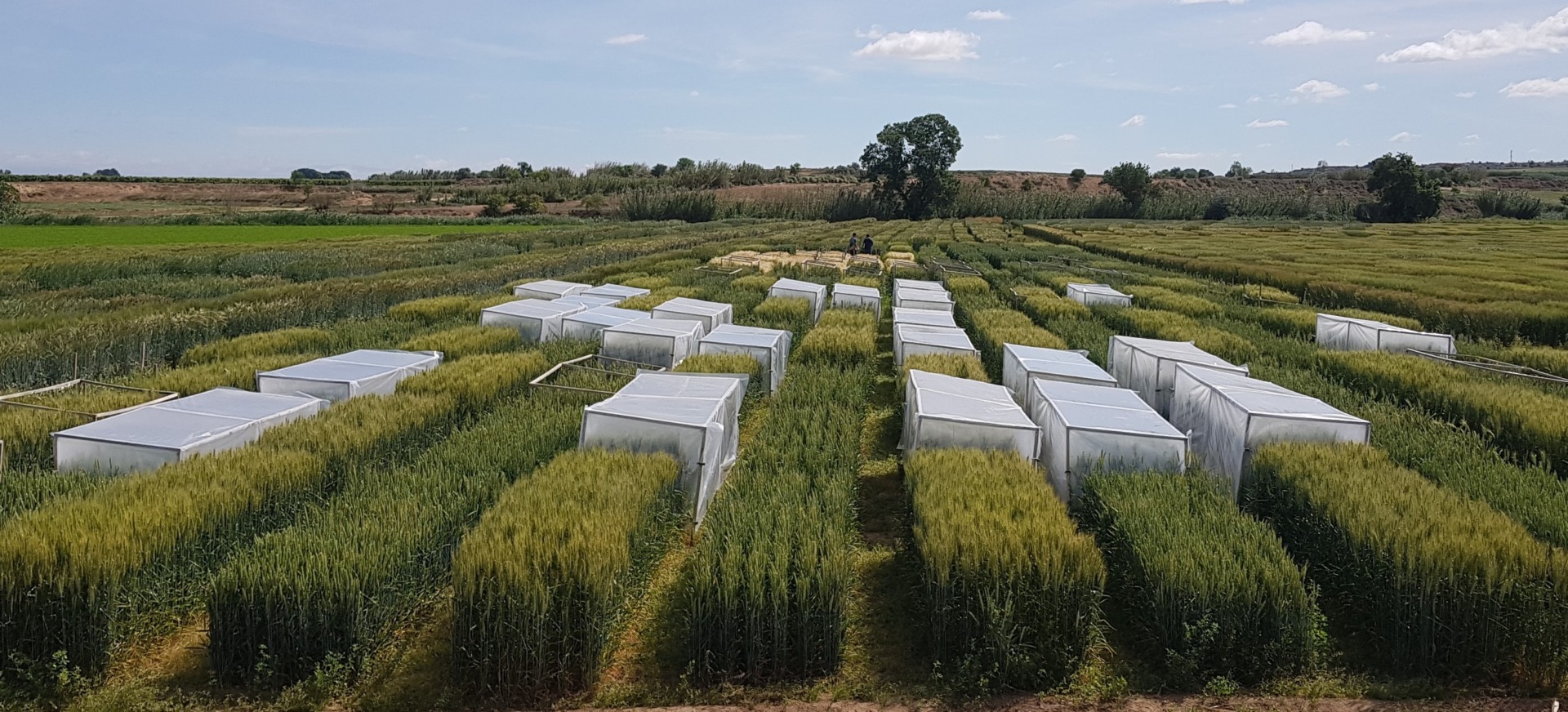
The field experiments were conducted over two growing seasons and with two different wheat varieties, which showed similar responses to the heat stress treatments. Heat waves were simulated using transparent tents that increased daytime temperatures through a greenhouse effect.
The results show that grain yield is more sensitive to heat waves occurring before flowering than to those taking place afterwards. Specifically, pre-flowering heat episodes mainly affected the total number of grains produced, whereas later heat waves had a greater impact on grain weight.
As explained by the study’s lead author, Gustavo Slafer, ICREA Research Professor at the University of Lleida and researcher at Agrotecnio, “most studies have examined heat stress as a single event and, often, under controlled rather than field conditions. We investigated whether an earlier heat wave could modify how wheat responds to subsequent heat exposure during its development.”
An initial heat wave can prime the plant
One of the study’s most notable findings is that plants exposed to an initial heat wave before flowering were less affected by a subsequent heat wave than plants that had only been exposed to the second heat wave.
This phenomenon is related to what is known as physiological memory or “priming”, a mechanism whereby an initial exposure to a stress condition can activate protective responses that remain partially active, allowing the plant to respond more effectively to subsequent stress.
“To the best of our knowledge, this is the first evidence of this type of antagonistic interaction between successive heat waves in field-grown crops,” says another of the study’s authors, Professor at the University of Lleida and researcher at Agrotecnio, Roxana Savin.
Implications for climate change adaptation
The findings could help improve crop yield prediction models and identify more precisely when and under which conditions climate change adaptation measures may be most effective.
“The study reinforces the importance of protecting wheat during the stages when grain number is determined, particularly around flowering,” explains Savin. “Therefore, the most effective adaptation measures will probably be those that reduce exposure to high temperatures during the most sensitive reproductive stages.”
Although the study focuses on wheat, the researchers consider that this type of response could also be relevant to other temperate cereals, such as barley, oats and rye. However, temperature thresholds and responses to heat may vary between species.