- Fruit expert, Dr. Ignasi Iglesias, highlights the key role of technological innovation to achieve efficient and sustainable production
- The future of sweet fruit is the focus of the new innovation breakfast organised by Agrotecnio and the Agrobiotech Park
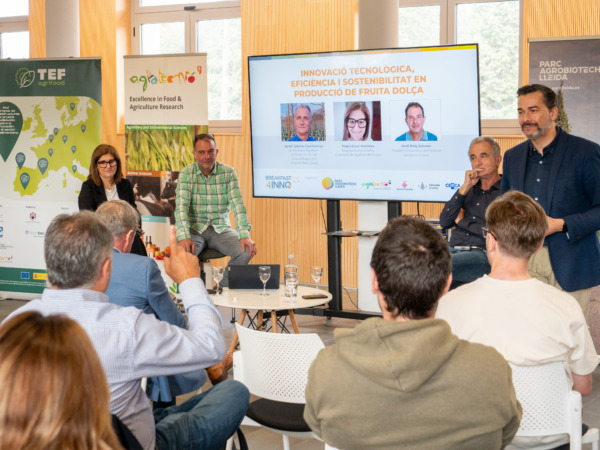
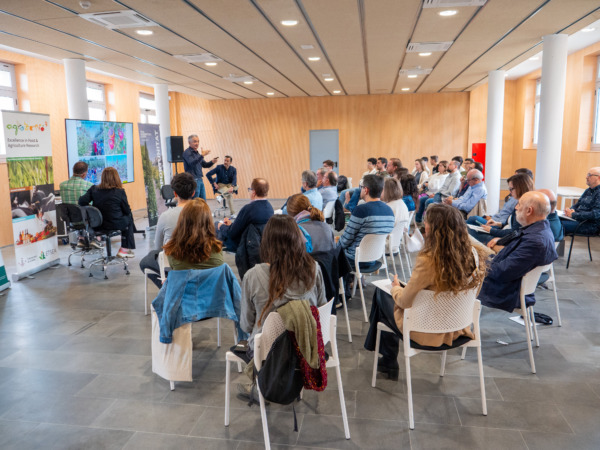
As part of the Breakfast4Inno cycle of innovation breakfasts, Agrotecnio and the Agrobiotech Lleida Park have promoted a technical conference to analyse the future of sweet fruit production in the face of the global challenges affecting the sector: climate change, the sustained increase in costs and the new environmental requirements arising from the CAP (Common Agricultural Policy) and the European Green Pact.
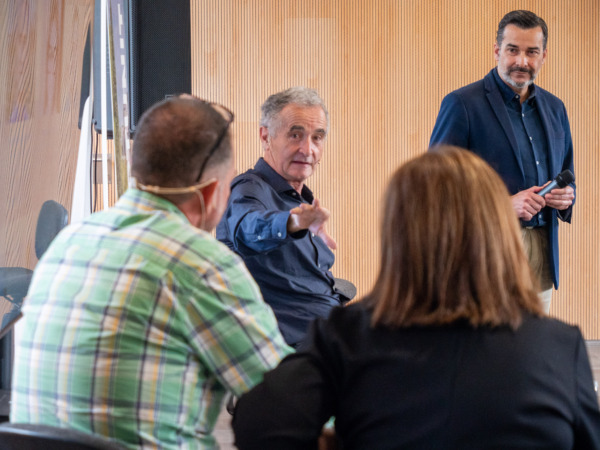
Dr. Ignasi Iglesias, an expert in fruit growing, researcher and disseminator, opened the conference with a talk focussing on the main challenges and opportunities in the sector. Iglesias stressed that the continuous increase in production costs, especially in woody crops, far exceeds the evolution of prices received by producers. This reality is jeopardising the viability of many farms and slowing down generational renewal, particularly in rural areas of Catalonia.
During his speech, he gave specific examples of technological innovation applied to fruit production, such as intensive and sustainable cultivation systems, varieties and patterns adapted to the new climatic conditions, mechanisation and digitalisation of the field, sensors to monitor soil, plant and climate or predictive systems for pest and disease control.
Iglesias stressed that ‘
the agricultural sector is evolving from a model based on the intensive use of resources to one based on knowledge through innovation. Innovation – both in plant material and in production and post-harvest technology – is essential to reduce costs, optimise quality and guarantee the efficiency and sustainability of the production sector,’ he added. Iglesias pointed out that innovation must go hand in hand with the establishment of a fair price for producers, as innovation requires large investments.
Iglesias pointed out that ‘
southern Europe is particularly affected by the effects of climate change, which makes it necessary to reorient crops and incorporate new technologies’. He also called for
‘recognition and adequate compensation for the ecosystem services provided by agricultural activity, such as the maintenance of the rural world and carbon capture’. In this respect, he pointed out that ‘
the 200,000 hectares of fruit trees in Spain sequester the carbon emitted by a city like Barcelona over the course of a year’.
Fruilar, a success story of innovation applied to agriculture
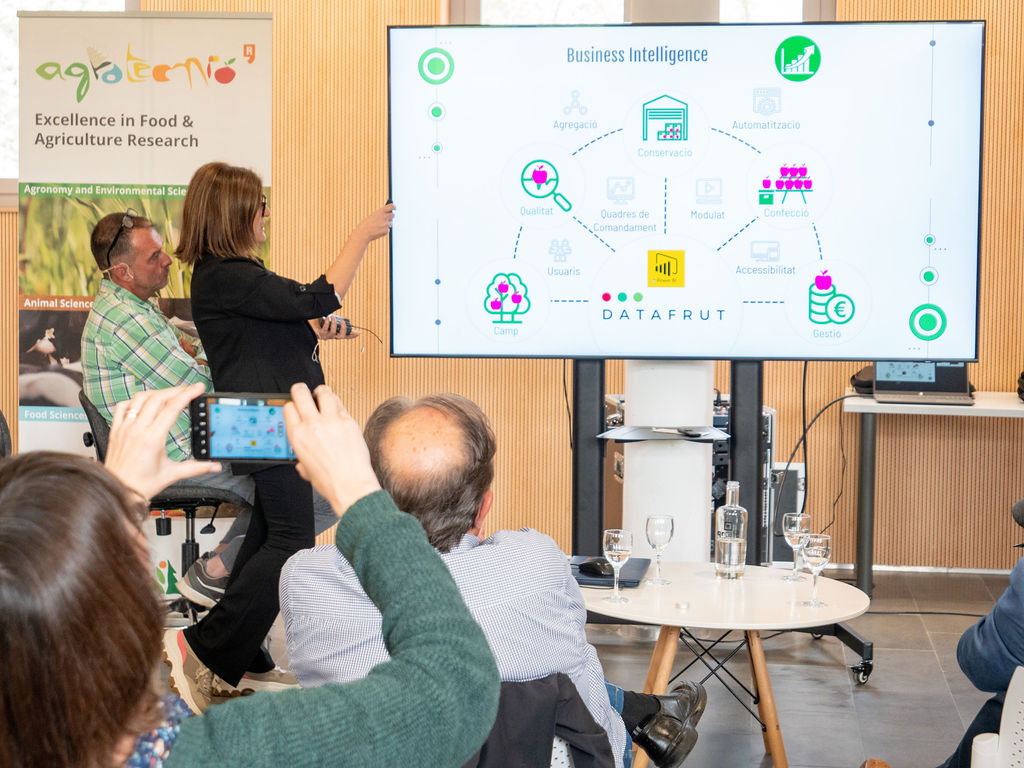
The conference featured the experience of Fruilar, a company from Lleida with more than 50 years of history, which is promoting a major technological transformation. Paquita Escoi, Quality Manager, explained how the company has progressively and strategically integrated advanced technologies.
Amongst others, it has incorporated artificial vision systems for fruit classification, uses satellite image monitoring and the use of Business Intelligence (Datafrut) to convert data into efficient decisions.
Fruilar has also begun to explore the application of efficient irrigation models in the field, such as IRRIDESK, developed by IRTA, which optimises water use based on climate data, soil information and satellite images, with the aim of improving sustainability and reducing environmental impact.
In addition, Fruilar has introduced robotics into the packaging process, improving accuracy and reducing operating costs. Currently, they are also closely monitoring the possibilities of generative AI, with the aim of integrating it into decision-making in a practical and efficient way.
‘
Technology is not an end in itself, but a tool to work better,’ said Escoi, who stressed the importance of applying innovation judiciously and at the right time. ‘
Data is an asset that you have to know how to work with’, he added.
The breakfast also featured the intervention of the fruit grower and president of the Les Planes de Torregrossa Cooperative, Jordi Reig Solsona, who shared his personal experience. Reig emphasized that the mechanization of some stages of production has allowed them to overcome challenges such as the difficulty in finding qualified workers for high-value tasks, such as pruning trees, and has opened the door to maintaining annual production, avoiding alternation. Despite these advances, he warned that the lack of generational replacement in the field could be a brake on the implementation of new technologies: ‘T
he average age of producers is around 60 years old, and many people are not familiar with the use of technology’, he stressed.