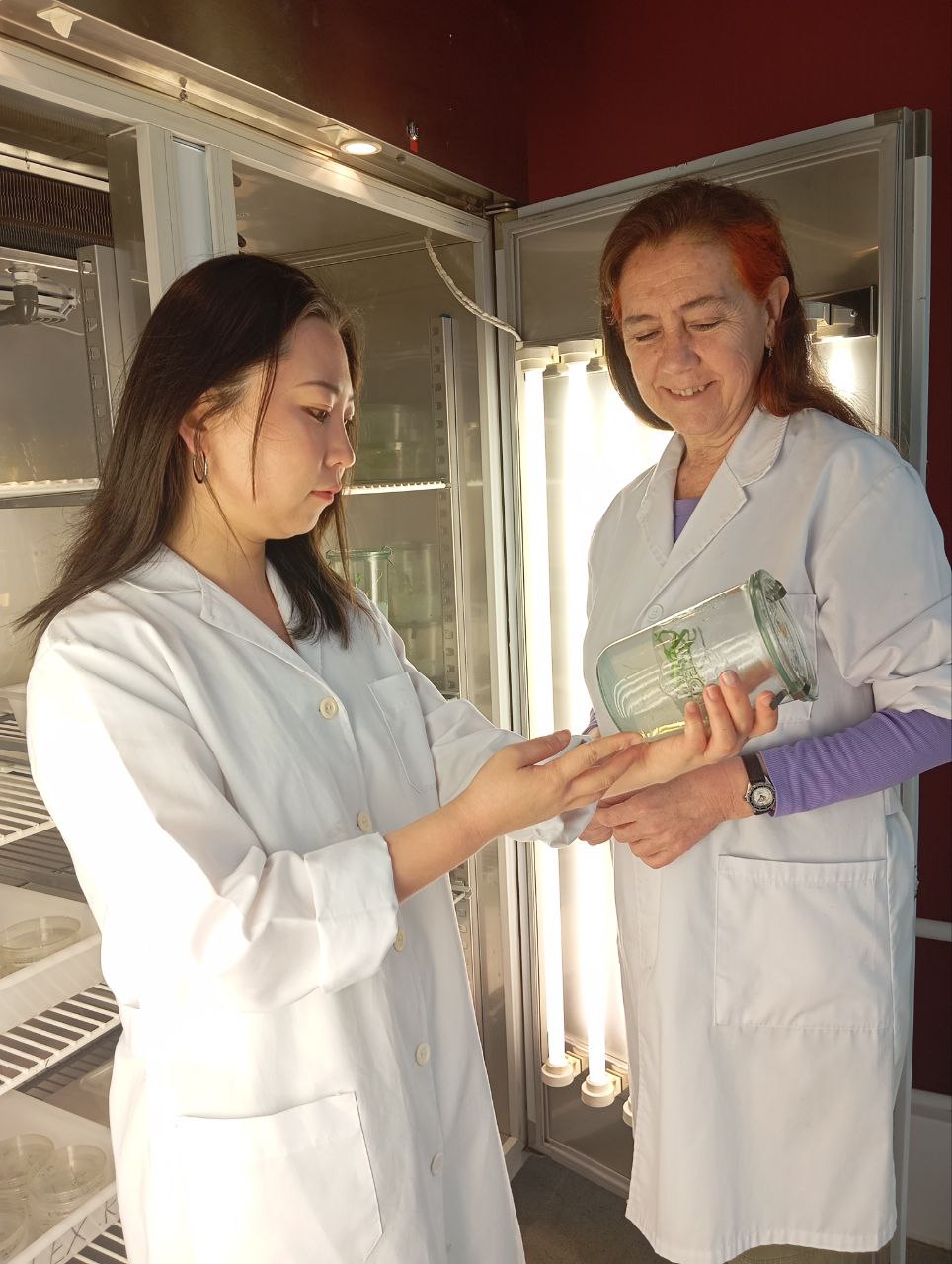
In an article published in the prestigious journal Trends in Plant Science, researchers from Agrotecnio and the University of Lleida review the latest advances in CRISPR technologies.
The leading journal Trends in Plant Science has published an invited article by researchers from Agrotecnio and the University of Lleida that reviews the latest advances in rice genome editing and highlights this technology as a key tool to tackle global food challenges in a world affected by climate change.
Rice feeds more than half of humanity but increasing yields fast enough to feed an additional five billion people by 2050 is becoming increasingly difficult as soils degrade and the climate warms. The scientific review shows how next-generation genome editing tools are transforming rice improvement, providing precise, enhancements in yield, stress tolerance, and grain quality that conventional methods alone can no longer achieve.
In the article “Genome Editing in Rice: Towards Climate-Resilient and Nutrient-Rich Crops”, researchers from Agrotecnio and the University of Lleida—Xin Huang, Wenshu He, Ludovic Bassie, Paul Christou, and Teresa Capell—review the latest advances in CRISPR-based genome editing technologies. These tools enable highly precise modifications to crop genomes, including minute changes to the plant’s own genes as well as targeted insertions of specific DNA sequences, with the aim of improving yield, resilience to environmental stresses, and nutritional quality.
CRISPR technologies encompass genome editing techniques that enable precise modifications of an organism’s genes. Unlike conventional breeding methods, CRISPR and other next-generation genome editing approaches (such as base editing or prime editing) allow targeted changes to the genome, opening the door to faster and safer improvements in yield, disease resistance, and grain quality.
Higher yields, resilience and nutritional improvement
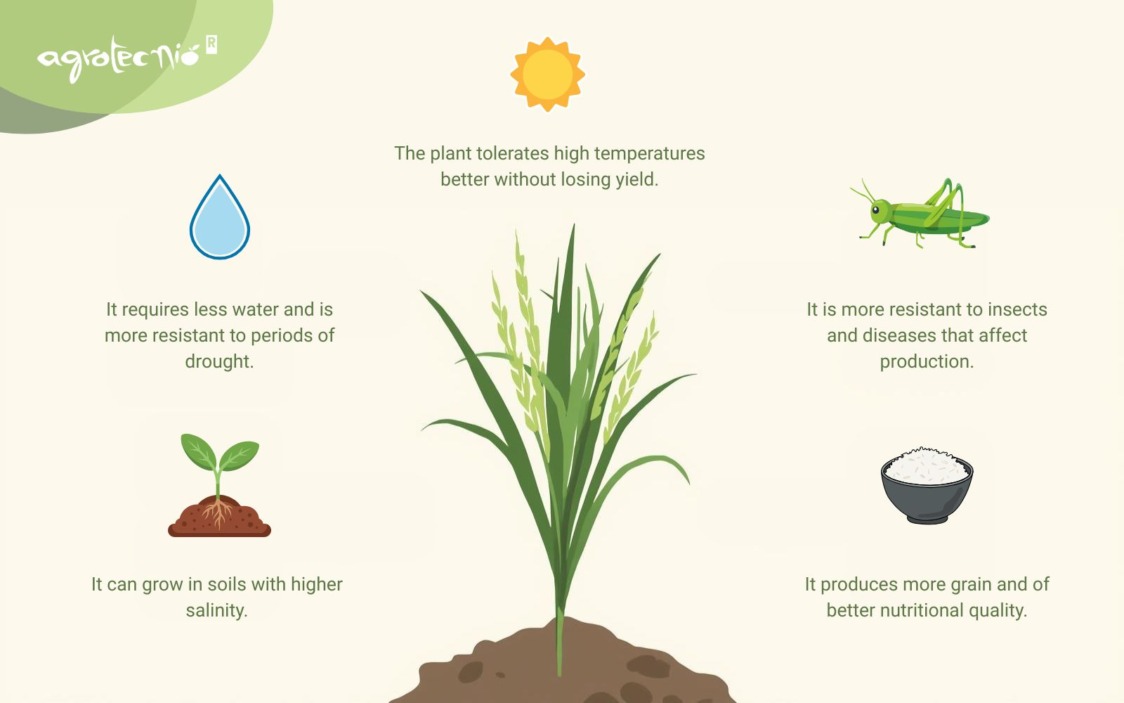
The authors report that genome-editing techniques have increased grain size and number, improved plant architecture and optimized nitrogen use efficiency. New varieties have also shown greater tolerance to abiotic stresses such as drought, salinity and extreme temperatures, as well as resistance to pests and diseases without yield penalties.
Genome editing has also enhanced the nutritional value of rice grains. Lines with increased β-carotene (a precursor of vitamin A) and higher zinc levels have been developed. Starch digestibility has been tailored by adjusting amylopectin and amylose content, and improvements have been achieved in protein composition and aromatic compounds, resulting in grains with premium organoleptic properties. Finally, the accumulation of heavy metals such as arsenic and cadmium has been significantly reduced, enabling safer cultivation even in contaminated soils.
Future challenges: technical barriers and lack of harmonized regulation
Despite these advances, the authors conclude that commercial applications still face technical and regulatory challenges. Key technical obstacles include precision in multiplex gene editing, the difficulty of inserting large DNA fragments, and dependence on specific genotypes for plant transformation and regeneration. At the regulatory level, they point out that the lack of globally harmonized standards hampers international trade. Scientific transparency and effective communication with society are essential to achieve public acceptance, they argue.
The authors conclude that, with sustained investment, public–private cooperation and harmonized regulatory frameworks, genome editing can drive a new generation of climate-resilient, nutrient-rich, high-yield cereals and other crops that are essential for global food security.