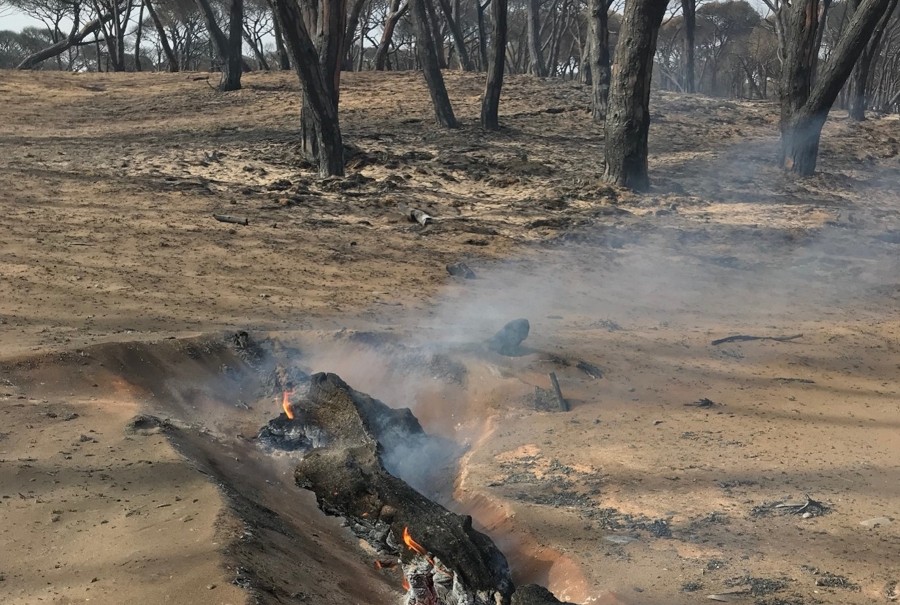
- Research led by UdL – Agrotecnio states that the danger has multiplied by 6 in 20 years
Increasing protected areas, as established by recent international regulations, may increase the risk of population exposure to the most virulent wildfires. In fact, this danger has multiplied by 6 over the past 20 years, both in southwestern Europe and in Australia. This is shown by research led by the University of Lleida (UdL) – Agrotecnio, recently published in the
Journal of Environmental Management. Researchers from UdL, the joint CTFC-Agrotecnio unit, Western Sydney University (Australia), the University of Trás-os-Montes e Alto Douro (Portugal), and the UNED participated in the study.
The research addresses how wildfires are affecting protected areas and the possible impacts of expanding strictly protected land, as proposed by the
EU Nature Restoration Law and the
Convention on Biological Diversity, approved in the K
unming-Montreal Framework. “The current plans to expand strictly protected forest areas, where human intervention is not allowed, can be particularly problematic from the perspective of wildfires,” says Víctor Resco, professor of Forest Engineering and Global Change at UdL and researcher at Agrotecnio and CTFC. “We believe that in order to reduce fire severity and population exposure, conservation programs must take into account wildfire prevention and mitigation,” he adds.
The team analyzed 76,621 fires, 16% of which affected protected areas, recorded over 20 years (2001–2021) in southwestern Europe (Spain, Portugal, and southern France), California, Chile, and southeastern Australia (New South Wales, Victoria, and Tasmania). The total burned area was 14,791,054 hectares (ha). To determine whether fires inside protected areas were more severe, the study focused on large wildfires, meaning those affecting more than 500 ha.
In the two decades analyzed, protected areas increased by 17%, while the area burned within them grew by an average of 42%. Chile is the only exception to this trend. In the Mediterranean climate region, protected space represents only 1.2% of the land, and in the temperate region, protected areas are concentrated in the far south, which is cooler and wetter.
In the temperate zone of southwestern Europe, for example, protected areas increased from 21% to 38% of forested land between 2001 and 2021, but wildfires in these areas rose from 13% to 55% of the total burned area. “If protected areas account for 38% of the forest area, they should account for 38% of the burned area, but they accumulate 55%, which is 17 percentage points more,” Resco highlights.
The conclusions indicate that fire severity is approximately 20% higher in protected areas, both in Mediterranean and temperate biomes, and that population exposure to fire is up to 16 times higher for those living on the outskirts of protected forests. In southwestern Europe, people living near a protected forest are 9 times more likely to be exposed to wildfires. “The issue is not that protected areas are deliberately burned, but that when a fire that starts in an unprotected area reaches a protected one, it is more likely to become uncontrollable,” explains the UdL professor.
Among the causes of wildfire virulence in protected spaces, experts point to the accumulation of more biomass (fuel load), the lack of roads which reduces accessibility and complicates fire suppression; orographic challenges such as higher elevations or steeper terrain; and weather conditions like drought. “These results indicate that the expansion of protected areas, as currently being implemented, may increase the risk to the population. The planned increase in strictly protected areas is particularly dangerous, as these are where the highest fuel loads and poorest access can be found,” the researcher emphasizes.
MORE INFORMATION:
Article: Protected areas as hotspots of wildfire activity in fire-prone Temperate and Mediterranean biomes
Text: Premsa UdL / Agrotecnio