- The application of Precision Agriculture can allow reducing the use of plant protection products in apple crops
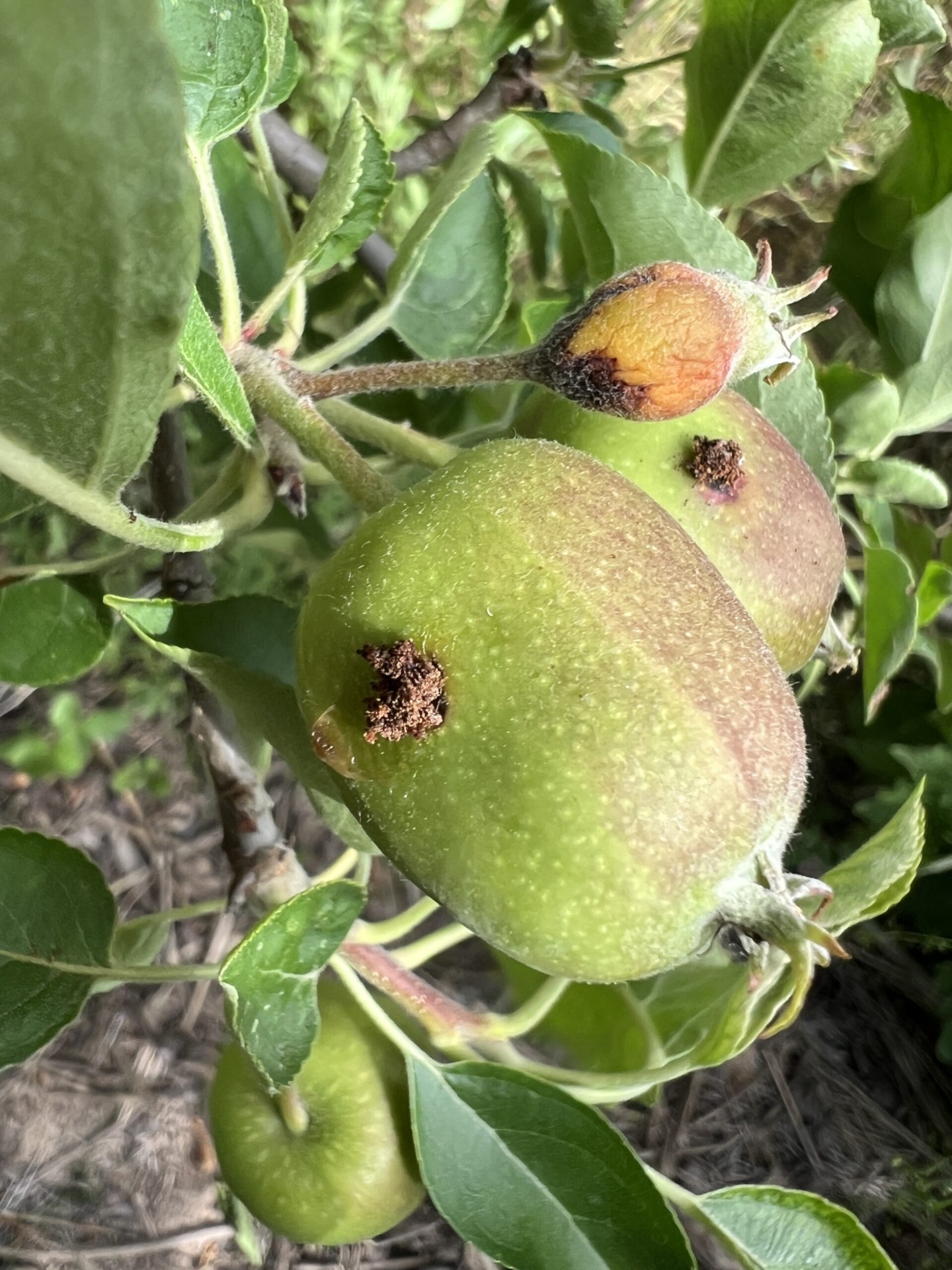
The codling moth larvae (Cydia pomonella), considered one of the most important pests of apple trees in the Lleida area, is not distributed homogeneously within the plots, but rather concentrates in more or less well-defined zones, where fruit damage can double the overall average of the entire orchard. This heterogeneity makes the efficient application of plant protection products more difficult. Two recent studies by the AgroTIC and Precision Agriculture Research Group (GRAP) of Agrotecnio and the
University of Lleida have advanced new sustainable management strategies to reduce both the impact of this pest and the use of pesticides.
In
the first study, the researchers monitored an apple orchard in Puigverd de Lleida (Segrià) with 18 georeferenced delta traps and carried out weekly captures throughout the 2024 season, from April to September. Using geostatistical techniques, they generated pest distribution maps and demonstrated that Cydia pomonella is not distributed uniformly: the areas with more insect captures coincided with the points showing greater fruit damage.
It was observed that the location of the reference trap used by fruit growers for monitoring is key: if it is placed in a low-infestation area, it may give a false impression of low pest pressure, generating a “false negative” that underestimates the real risk. On the other hand, if the trap is placed in an area with a high concentration of adults, the number and timing of treatments can be better adjusted
The study concludes that pest maps improve the farmer’s decision-making, as they allow for more precise treatments. According to the authors, Ouijdan Hajjaj, Jaume Arnó, Dolors Bosch-Serra and José Antonio Martínez-Casasnovas, these maps “are a key tool to anticipate damage, decide the optimal moment to apply treatments, and avoid unnecessary applications.”
When size matters: the relationship between tree structure and the pest
The
second study analyzed the relationship between the pest and the tree canopy. Using terrestrial LiDAR technology, the structure of the apple tree foliage was studied, and it was observed that the pest tends to concentrate in smaller apple trees with more foliage.
Through statistical models, the researchers verified that, by observing the size and density of the canopy, it is possible to predict whether that area of the plot will exceed the threshold that requires a plant protection treatment. This information makes it possible to create prescription maps for selective pesticide applications: adjusting doses according to canopy size and vigor, combining canopy information with the actual pest distribution, or applying product only in areas most likely to exceed the treatment threshold.
The authors of this study are Ouijdan Hajjaj, José Antonio Martínez-Casasnovas, José Manuel Plata, Jordi Llorens, Àlex Escolà, Xavier Torrent and Jaume Arnó.
Both studies demonstrate that combining pest maps with information about tree canopy allows optimization of plant protection treatments: they are applied only where and when needed, doses are reduced, and both the crop and the environment are protected.
Both research works have been developed within the framework of the
PAgPROTECT project, reference
PID2021-126648OB-I00, “Precision crop protection to achieve European Green Deal objectives in efficient use and reduction of plant protection products through Precision Agriculture,” funded under the
2022 Knowledge Generation Projects call of the
Ministry of Science and Innovation.
More information:
Spatio-temporal pattern analysis of the codling moth Cydia pomonella at plot scale: does location of monitoring traps matter?
Pest-canopy interaction at plot level as a new driver for variable-rate pesticide applications