A study by Agrotecnio and the CIAGRO-University Miguel Hernández Institute demonstrates the complementary effects of grazing and shrub expansion on soil fertility and quality
Mountain pastures managed through extensive livestock grazing and the natural presence of shrubs jointly contribute to improving soil health. This is the conclusion of a recent study by Agrotecnio and the CIAGRO-University Miguel Hernández Institute. The research shows that livestock grazing and shrub growth are not opposing processes but act in a complementary way, enriching the soil and increasing its resilience to climate change.
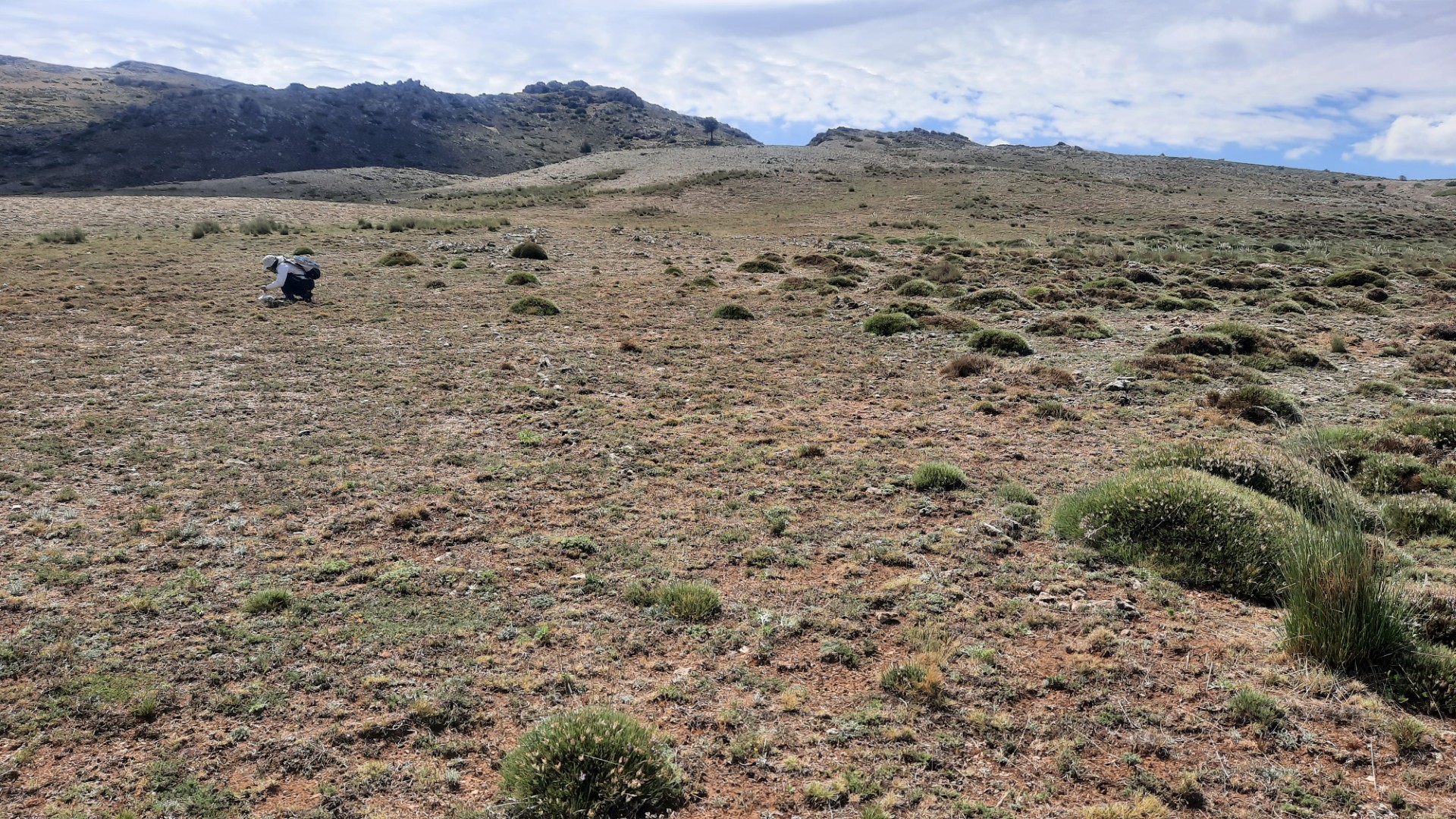
The study was carried out over several years in the Natural Park of Cazorla, Segura and Las Villas (Jaén), covering an area of 14,000 hectares of Mediterranean high mountain terrain. Twenty-six sheep flocks were monitored using GPS collars, which allowed researchers to create a detailed grazing intensity map. In parallel, soil samples were collected from areas with and without shrubs to compare their effects on the soil’s physical, chemical, and biological properties.
The results show that grazing significantly increases soil nutrients: available phosphorus up to 12 times, total nitrogen by 0.3%, and organic carbon by up to 4.5%. The presence of shrubs increases organic carbon by 1.2% and particulate organic matter by 44%.
The study also concludes that both grazing and shrubs improve soil aggregate stability – a key factor in preventing erosion – that grazing nearly doubles microbial biomass and enhances its metabolic efficiency, and that shrubs, in turn, stimulate enzyme activity related to phosphorus and carbon, strengthening soil fertility and carbon sequestration capacity.
The research was led by Agrotecnio researcher Evan A.N. Marks and published in the journal Agriculture, Ecosystems and Environment. The study involved J.M. Barbosa, J. Mataix-Solera, F. García-Orenes, M. Rincón-Madroñero, V. Arcenegui, S. Albolafio, A. Contreras, and J.A. Sánchez-Zapata. The authors show that livestock grazing and shrub presence act in a complementary manner to improve soil health and fertility, contributing to carbon sequestration and resilience to climate change.
According to Marks, “this provides new evidence for sustainable mountain pasture management policies that integrate livestock production with soil conservation and climate mitigation.”
More information: https://www.sciencedirect.com/science/article/pii/S0167880925001847