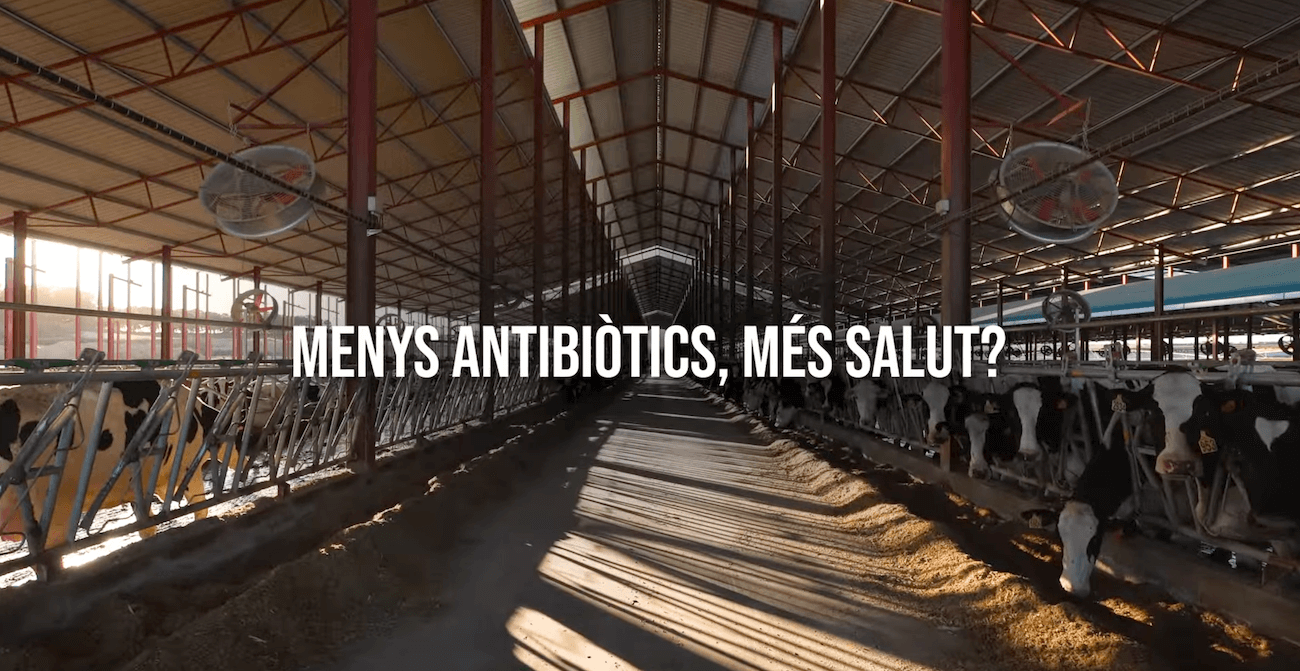
- Agrotecnio and the UdL Department of Law analyse the impact of antibiotic reduction in dairy farms
- The project also includes an outreach video to bring research closer to society
Agrotecnio and the Department of Law of the University of Lleida (UdL) are promoting a joint research project to analyse the impact of the political and regulatory framework that encourages the reduction of antibiotic use in high-production dairy cow farms in the province of Lleida.
The project “Impact of antibiotic reduction policies on the health and welfare of dairy cows” is led by researchers Irina García-Ispierto, from Agrotecnio and the UdL, and Laura Salamero, a researcher at Agrotecnio and the UdL Department of Law and has a clear interdisciplinary focus. The aim is to assess not only whether reducing antibiotic use is effective, but also what consequences it has for animal health and welfare, veterinary professional practice, and the economic sustainability of livestock farms. The researchers focus both on animal health and on the practical and legal implications faced by veterinary professionals and producers.
The research is based on the hypothesis that the implementation of regulations requiring a reduction in antibiotic use may lead to unintended changes in veterinary practices. These changes could negatively affect animal health and welfare and, by extension, public health, as well as have an adverse impact on the economic viability of farms. For this reason, the project seeks to provide a critical, evidence-based perspective to assess whether current policies truly achieve a balance between reducing health risks and preserving animal welfare and sector sustainability.
The work is framed within the One Health concept promoted by the World Health Organization, which understands human, animal, and ecosystem health as interconnected dimensions. In this context, reducing antibiotic use in livestock farming is essential to curb the emergence of bacterial resistance, one of the main threats to public health worldwide. However, the researchers stress that such a reduction cannot be applied uncritically and that its real effects in the field must be assessed.
The farm veterinarian, a key figure
One of the central points of the project is the analysis of the role of farm veterinarians, a key figure in the implementation of European regulations at state and regional level. These professionals assume major responsibility for the control, recording, and justification of antibiotic treatments, which has substantially changed their daily practice. The legislative change has generated debate within the veterinary sector, both due to the increased bureaucratic burden and the legal implications involved. Such is the level of regulatory conflict that a new amendment to Royal Decree 666/2023, which regulates veterinary medicinal products, is currently under way.
The research also examines how treatment protocols have evolved. Whereas antibiotics were previously often used preventively, they can now only be administered following a clear diagnosis and documented justification. This change has reduced overall antibiotic consumption, but at the same time raises new challenges, such as the risk of delaying necessary treatments or increasing animal suffering in certain clinical situations.
A video to bring research closer to the public
The project includes the production of an outreach video that clearly and accessibly explains the issues associated with regulating antibiotic use in dairy cow farms. Through testimonies from researchers, veterinarians, representatives of the sector and public administration, the video shows the complexity of a challenge that is not only scientific or legal, but also social and economic.