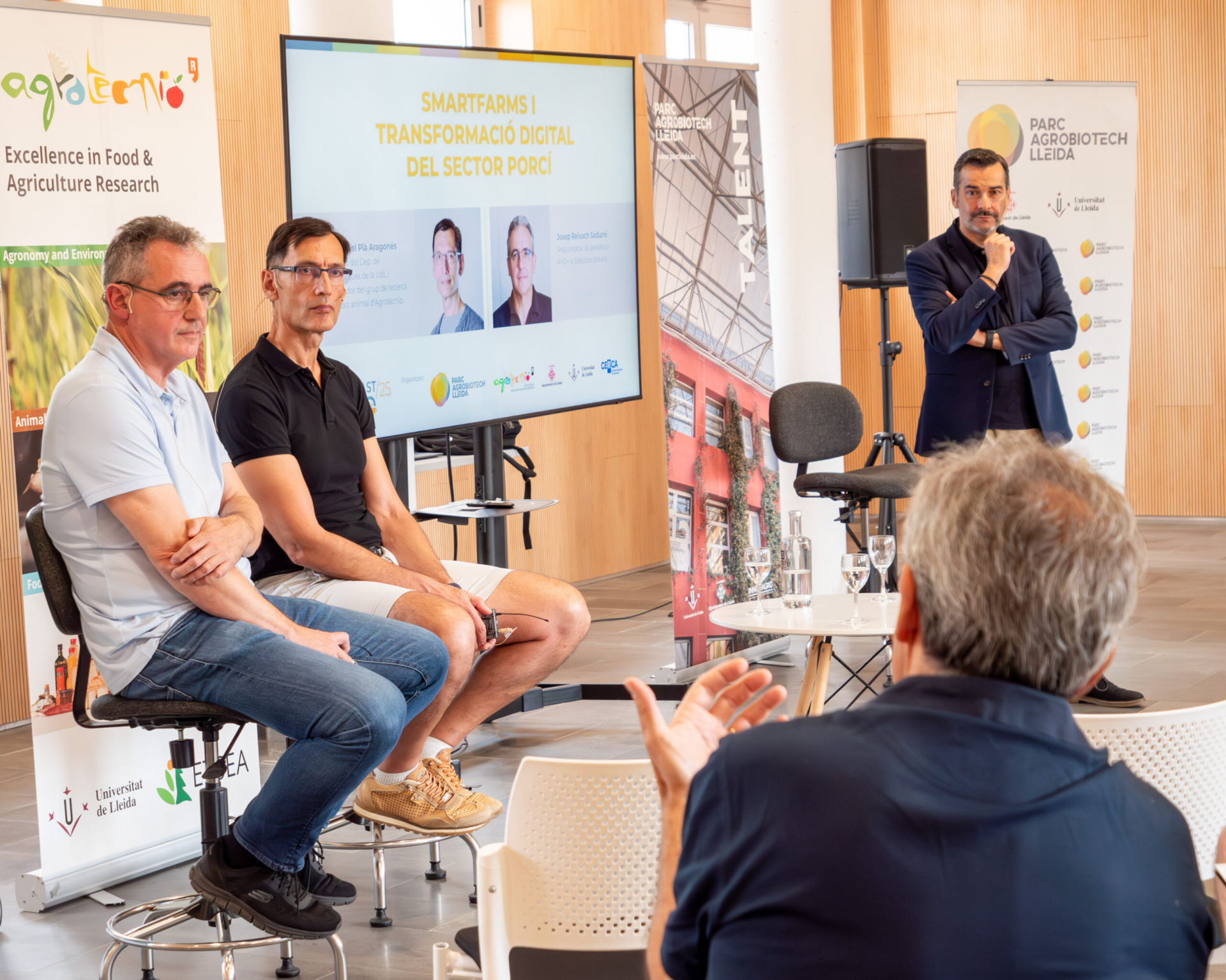
The digital transformation of the pig sector was the focus of this month’s
Breakfast4Inno event, organised by Agrotecnio and the Parc Agrobiotech Lleida. The innovation breakfast was dedicated to exploring emerging technological solutions in so-called smart farms or intelligent farms.
The speakers at the event, Lluís Miquel Pla, Professor of Mathematics at the University of Lleida and researcher at Agrotecnio, and Josep Reixach, head of genetics and R&D&I at Selección Batallé, shared the results of various pilot projects that integrate real-time monitoring, process automation, and the application of artificial intelligence in livestock farms.
One of the key innovations is the development of digital twins for managing pig fattening, a solution that allows data from multiple sources to be integrated to generate high-value strategic information. These systems are complemented by a wide range of smart sensors, such as 3D cameras to estimate live weight, devices to monitor water and feed consumption, acoustic analysis systems to detect respiratory problems, and platforms to monitor animal welfare.
These technologies are being successfully tested in experimental 5.0 farms and slaughterhouses, with promising results in terms of precision and predictive capacity. The facilities are equipped with advanced systems such as RFID (Radio Frequency Identification) feeding stations, connected flow meters, environmental sensors measuring ammonia, CO₂ or dust, and data analysis tools that make it possible to anticipate health or animal comfort risks.
At the slaughterhouse, AI algorithms are being developed to assess respiratory lesions and detect necrosed tails, which are key indicators of animal welfare and breeding conditions.
Professor Lluís Miquel Pla explained that “the key is not just to collect data, but to transform it into useful knowledge. To make this possible, it is necessary to standardise formats, validate devices and ensure system interoperability. Only then will we be able to build a robust digital ecosystem oriented toward continuous improvement.”
According to Pla, “we are experiencing the boom of artificial intelligence, at the peak of the curve; but we will have to see the shortcomings of some solutions, as only the most robust will endure.”
For his part, Josep Reixach, head of genetics at Selección Batallé, described the various sensors being tested, both those already in the implementation phase and those still under development, in farms and slaughterhouses alike. According to Reixach, “the slaughterhouse is a very valuable source of information, as it allows us to detect, for example, whether pigs have had respiratory problems or the condition of their tails – key indicators of their welfare.”
Reixach also highlighted the overall benefits of the process: “Digitalisation not only improves production efficiency, but it is also an opportunity to make progress in animal welfare and sustainability. Thanks to data, we can act in real time and prevent problems before they arise.”
The Selección Batallé representative also stressed the importance of collaboration: “Only through cooperation between research, industry, and public administration can we bring these innovations into the real world.”
The event was attended by around thirty participants and concluded with a space for discussion and networking among attendees.