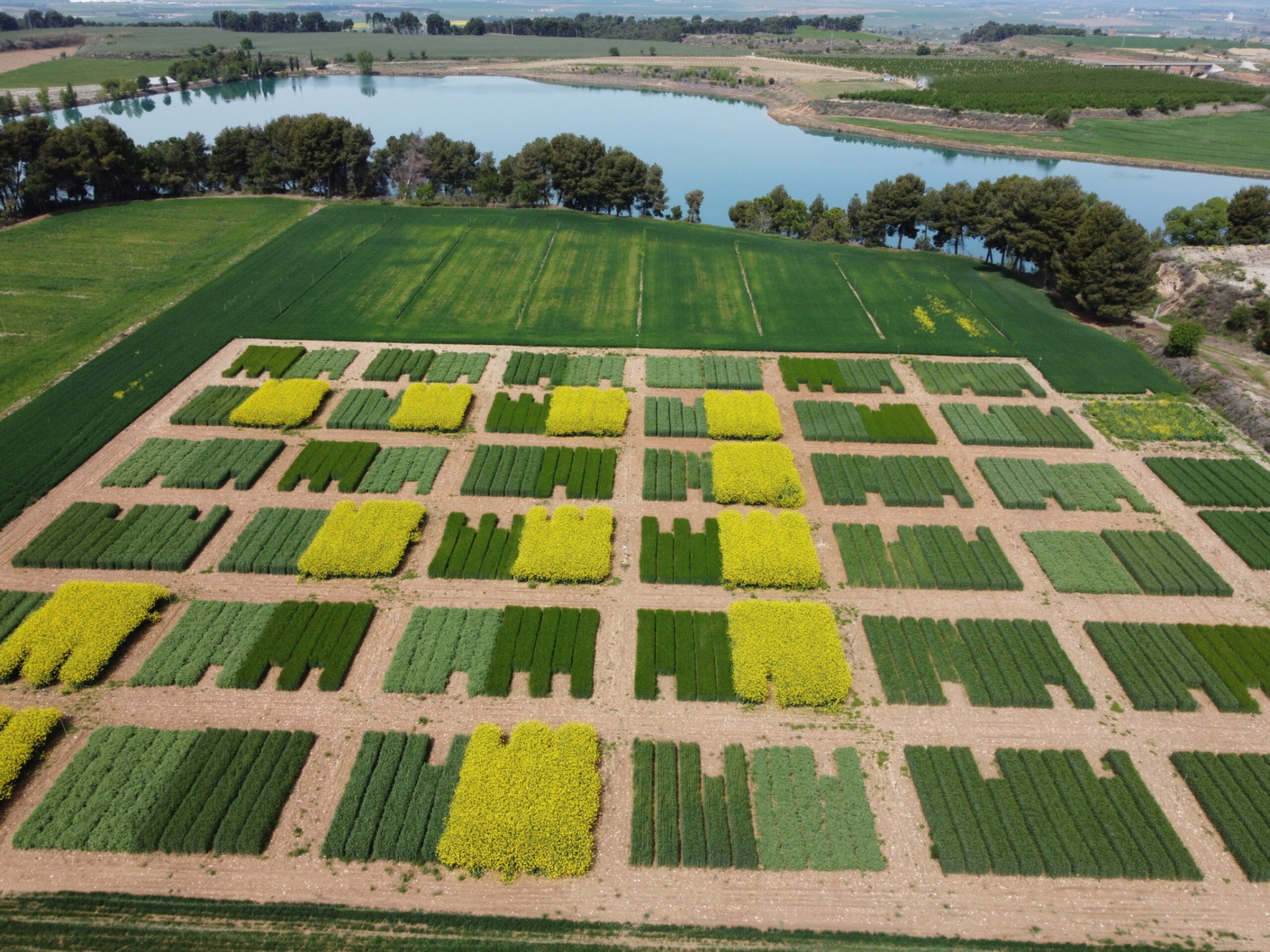
A study by Agrotecnio, IRTA and the University of Lleida shows that legumes such as peas and broad beans benefit subsequent crops and improve soil health
Incorporating legumes such as peas or beans into crop rotation can significantly improve soil quality and productivity. This is confirmed by a recent study conducted by researchers from Agrotecnio, IRTA and the University of Lleida (UdL), published in the journal Soil Use and Management.
The team has verified that the presence of a legume crop in crop rotation increases soil microbial biomass and promotes processes that are essential for soil fertility and stability.
The study analyses how growing legumes prior to wheat influences the decomposition of crop residues and roots of this cereal, as well as microbial dynamics and soil organic matter. To this end, the researchers compared treatments on plots with a legume (pea) grown before wheat with plots with a cereal (triticale) grown before wheat. Periodic samples were taken to assess variations in organic carbon, nitrogen, microbial biomass and enzymatic activity during the decomposition process of wheat residues.
The results showed that fields previously planted with leguminous species experienced faster decomposition of wheat crop residues, leading to a notable increase in soil microbial biomass, with greater beneficial activity for the transformation and stabilisation of organic matter.
According to Dr Gonçalo Nascimento, lead researcher on the study, “these results suggest that introducing a leguminous species into rotation with cereals can have significant and lasting benefits on soil quality and microbial function, keeping the system more fertile and efficient for several years.”
The decomposition of crop residues and roots, a key process for soil health
The decomposition of crop residues (harvest remains and roots), such as wheat straw, is a fundamental process for maintaining soil fertility and health. Although many farmers often export it for sale, it is advisable to reduce this practice. These residues provide nutrients and organic matter to the soil, serving as food for microorganisms and helping to keep it alive and fertile. However, other agricultural practices, such as crop rotation, can profoundly alter this process and make it more efficient.
The study shows that legumes, in addition to benefiting the growth of the subsequent cereal crop, improve the quality of the residues left in the soil. Specifically, peas make wheat residues a better food source for soil microbes and crops, promoting nitrogen availability and organic matter accumulation for up to two seasons after legume cultivation.
As Nascimento explains, “The greater release of nitrogen in the decomposition of wheat residues may explain why the benefits that legumes bring to subsequent crop yields tend to last for more than one season after they have been included in the rotation. Thanks to legume-cereal rotation, this subsequent cereal crop can effectively extend the effect of the previous legume. Well-designed rotations can thus equal or even exceed the effects of fertilisation in preserving soil function.”
The study therefore concludes that rotating cereals with legumes is a sustainable agricultural practice capable of improving soil quality and fertility, promoting beneficial biological processes such as the decomposition of crop residues and nitrogen mineralisation, and reducing dependence on chemical fertilisers. These effects show remarkable persistence, lasting two years after the legume crop.
More information: Benefits of a Preceding Legume Crop for Soil Organic Matter and Microbial Dynamics During Wheat Residue Decomposition (2025) Gonçalo Nascimento, Carlos Cantero-Martínez, Jorge Álvaro-Fuentes, Victoria Lafuente, Dolors Villegas. Soil Use and Management, https://doi.org/10.1111/sum.70116.
Josep Betbese