Agrotecnio takes part in a pioneering project to validate the use of drones for phytosanitary treatments in vineyards
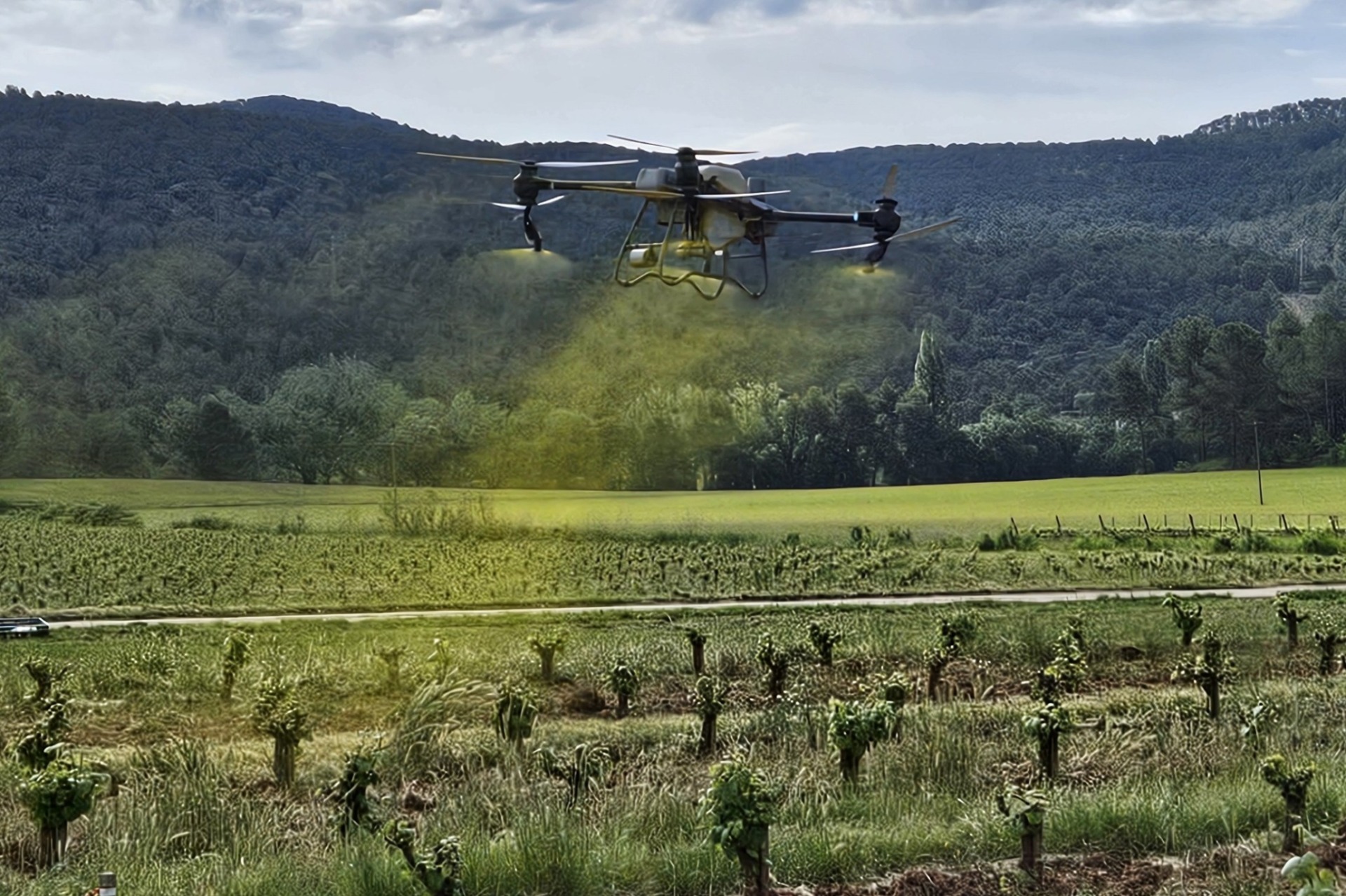
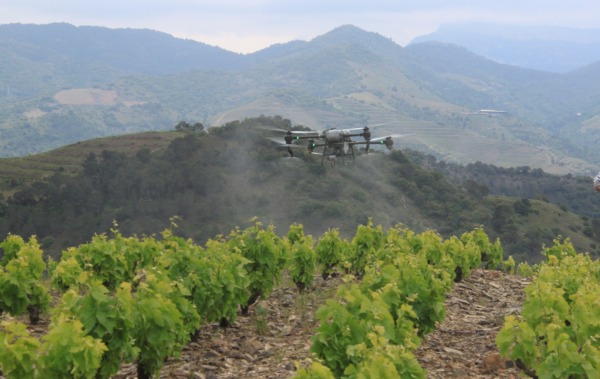 The CERCA centre Agrotecnio is participating in a pioneering project to test the use of drones in the application of phytosanitary products against fungal diseases in vineyards, such as powdery mildew and downy mildew. The DRONVINYA project, coordinated by the Catalan Wine Cluster (INNOVI) and led by Miguel Torres, is part of the 2023 Operational Groups call. Other leading Catalan wineries are also involved: the Vila-rodona Cooperative and Rendé-Masdeu.
DRONVINYA aims to position Catalonia at the forefront of the global wine sector, ensuring sustainable and safe practices and establishing drones as a key tool in precision agriculture. The trials are being conducted on five experimental estates located in the counties of Anoia, Priorat, Alt Camp, and Conca de Barberà. The main objective is to generate validated technical knowledge that supports the effectiveness and viability of this emerging technology, in a context of transition towards more efficient, sustainable, and environmentally friendly viticulture.
As Santiago Planas, researcher from Agrotecnio’s Crop Protection group, explains, “the results will have a direct impact on the regulation of drone use for phytosanitary applications in Spain, where there are still significant regulatory restrictions.” It is worth noting that in countries with very strict phytosanitary regulations, such as Germany, France, and Switzerland, the use of drones is authorised, putting our winegrowers at a disadvantage. “This line of research represents a step forward for the wine sector, which is seeking innovative solutions to tackle the challenges of climate change and the reduction in the use of chemical products,” adds Planas.
The pilot tests assess requirements in terms of efficacy, precision, safety, and environmental sustainability, and include a comparative analysis between conventional applications and those carried out using drones.
In the long term, this technology is expected to improve the competitiveness of the wine sector and promote the digitalisation of agricultural practices, especially in hard-to-reach areas where conventional ground-based treatments are difficult to implement.
DRONVINYA is a project co-funded by the European Union through the Strategic Plan of the CAP (PEPAC) 2023–2027.
The CERCA centre Agrotecnio is participating in a pioneering project to test the use of drones in the application of phytosanitary products against fungal diseases in vineyards, such as powdery mildew and downy mildew. The DRONVINYA project, coordinated by the Catalan Wine Cluster (INNOVI) and led by Miguel Torres, is part of the 2023 Operational Groups call. Other leading Catalan wineries are also involved: the Vila-rodona Cooperative and Rendé-Masdeu.
DRONVINYA aims to position Catalonia at the forefront of the global wine sector, ensuring sustainable and safe practices and establishing drones as a key tool in precision agriculture. The trials are being conducted on five experimental estates located in the counties of Anoia, Priorat, Alt Camp, and Conca de Barberà. The main objective is to generate validated technical knowledge that supports the effectiveness and viability of this emerging technology, in a context of transition towards more efficient, sustainable, and environmentally friendly viticulture.
As Santiago Planas, researcher from Agrotecnio’s Crop Protection group, explains, “the results will have a direct impact on the regulation of drone use for phytosanitary applications in Spain, where there are still significant regulatory restrictions.” It is worth noting that in countries with very strict phytosanitary regulations, such as Germany, France, and Switzerland, the use of drones is authorised, putting our winegrowers at a disadvantage. “This line of research represents a step forward for the wine sector, which is seeking innovative solutions to tackle the challenges of climate change and the reduction in the use of chemical products,” adds Planas.
The pilot tests assess requirements in terms of efficacy, precision, safety, and environmental sustainability, and include a comparative analysis between conventional applications and those carried out using drones.
In the long term, this technology is expected to improve the competitiveness of the wine sector and promote the digitalisation of agricultural practices, especially in hard-to-reach areas where conventional ground-based treatments are difficult to implement.
DRONVINYA is a project co-funded by the European Union through the Strategic Plan of the CAP (PEPAC) 2023–2027.
The CERCA centre Agrotecnio is participating in a pioneering project to test the use of drones in the application of phytosanitary products against fungal diseases in vineyards, such as powdery mildew and downy mildew. The DRONVINYA project, coordinated by the Catalan Wine Cluster (INNOVI) and led by Miguel Torres, is part of the 2023 Operational Groups call. Other leading Catalan wineries are also involved: the Vila-rodona Cooperative and Rendé-Masdeu.
DRONVINYA aims to position Catalonia at the forefront of the global wine sector, ensuring sustainable and safe practices and establishing drones as a key tool in precision agriculture. The trials are being conducted on five experimental estates located in the counties of Anoia, Priorat, Alt Camp, and Conca de Barberà. The main objective is to generate validated technical knowledge that supports the effectiveness and viability of this emerging technology, in a context of transition towards more efficient, sustainable, and environmentally friendly viticulture.
As Santiago Planas, researcher from Agrotecnio’s Crop Protection group, explains, “the results will have a direct impact on the regulation of drone use for phytosanitary applications in Spain, where there are still significant regulatory restrictions.” It is worth noting that in countries with very strict phytosanitary regulations, such as Germany, France, and Switzerland, the use of drones is authorised, putting our winegrowers at a disadvantage. “This line of research represents a step forward for the wine sector, which is seeking innovative solutions to tackle the challenges of climate change and the reduction in the use of chemical products,” adds Planas.
The pilot tests assess requirements in terms of efficacy, precision, safety, and environmental sustainability, and include a comparative analysis between conventional applications and those carried out using drones.
In the long term, this technology is expected to improve the competitiveness of the wine sector and promote the digitalisation of agricultural practices, especially in hard-to-reach areas where conventional ground-based treatments are difficult to implement.
DRONVINYA is a project co-funded by the European Union through the Strategic Plan of the CAP (PEPAC) 2023–2027.