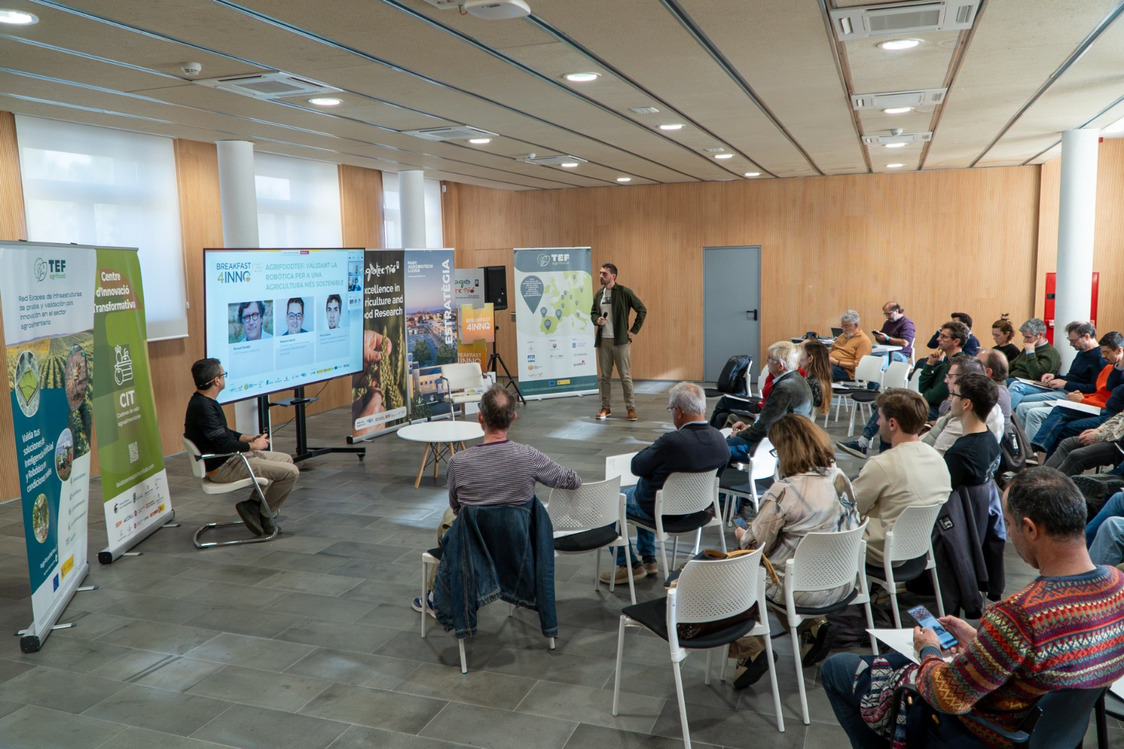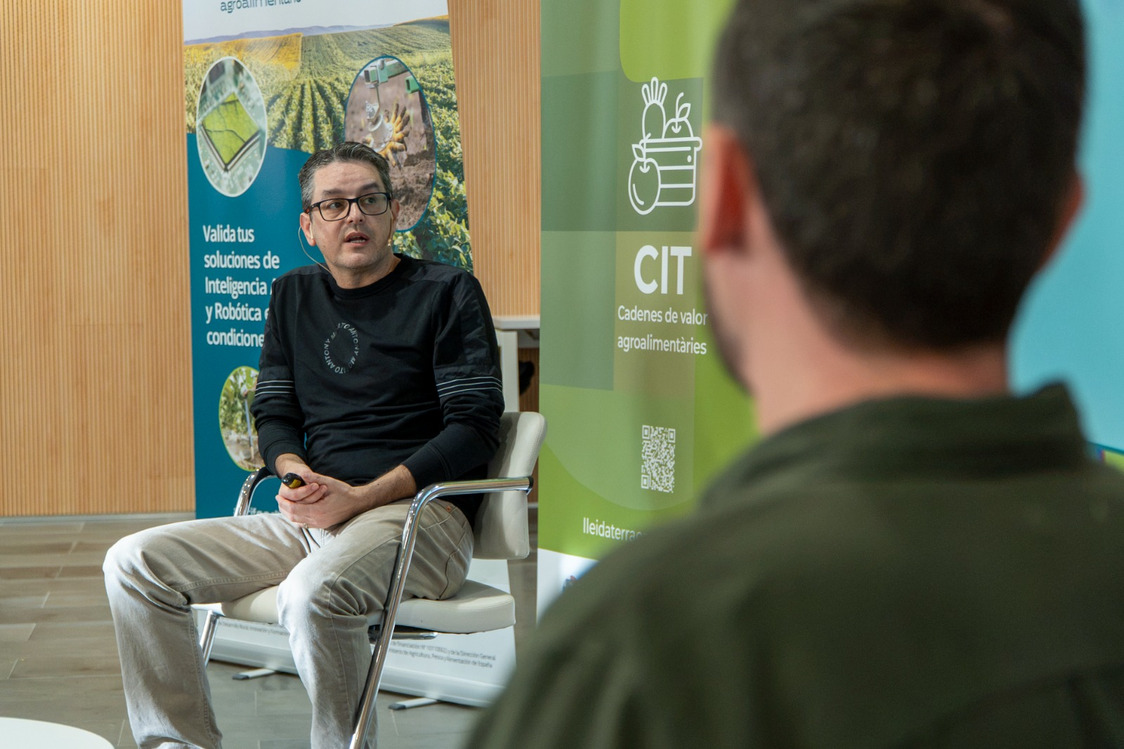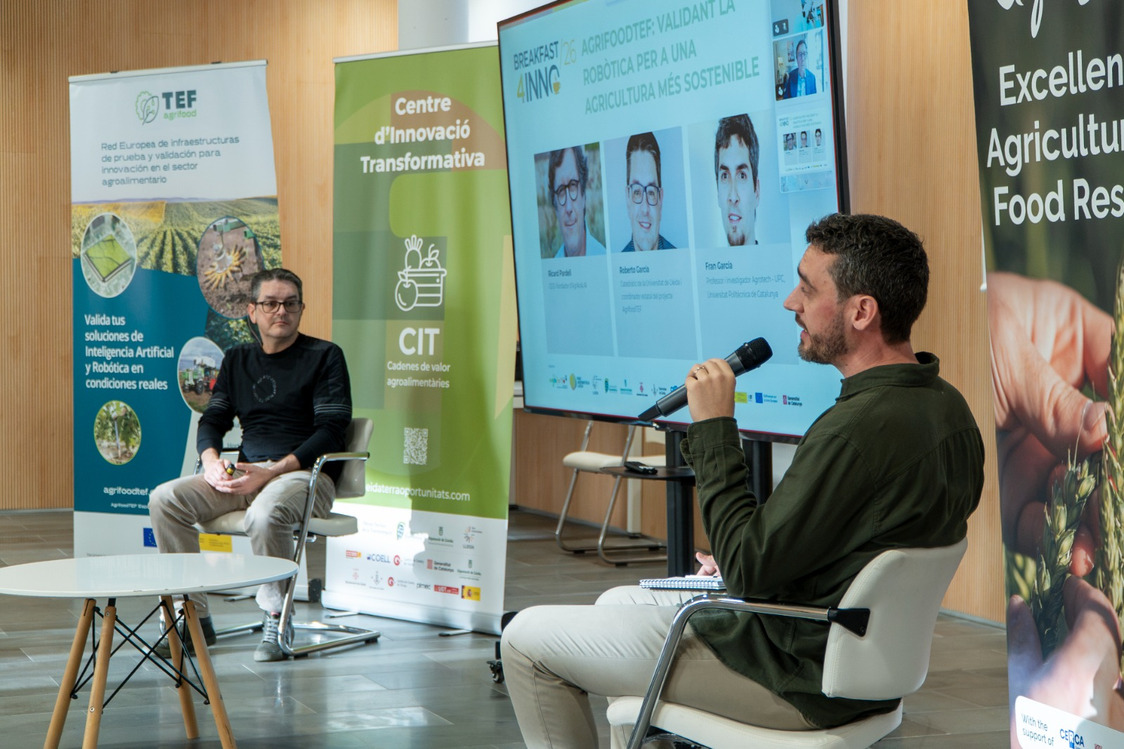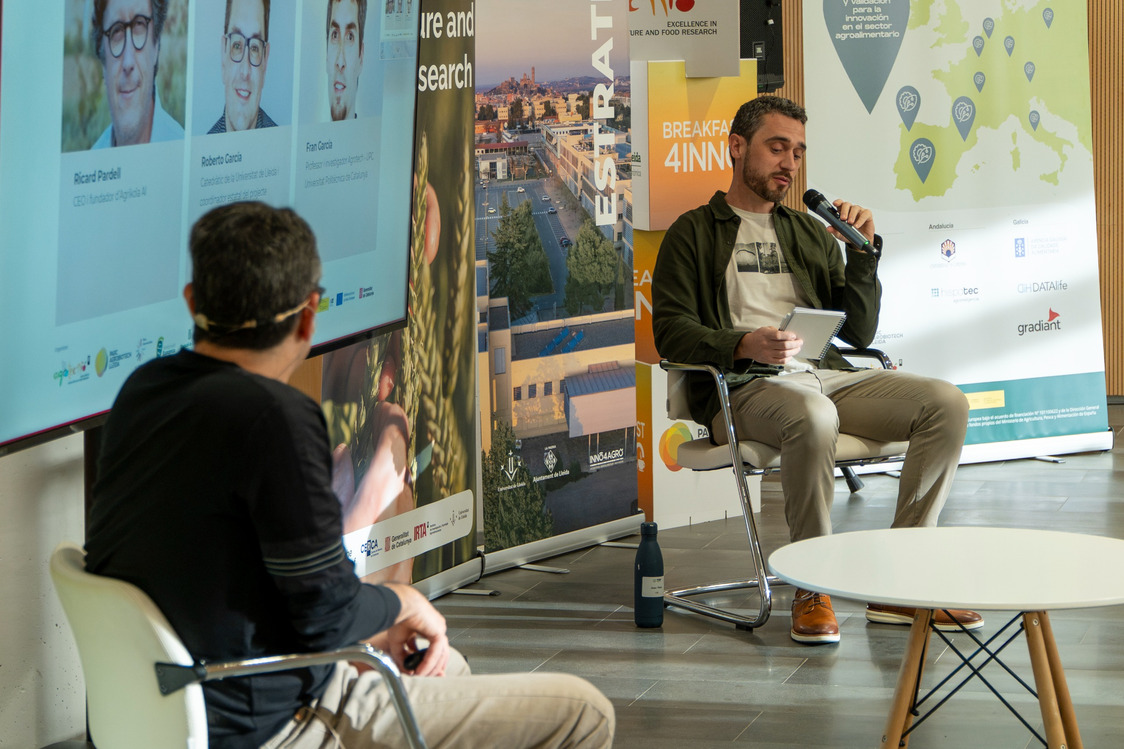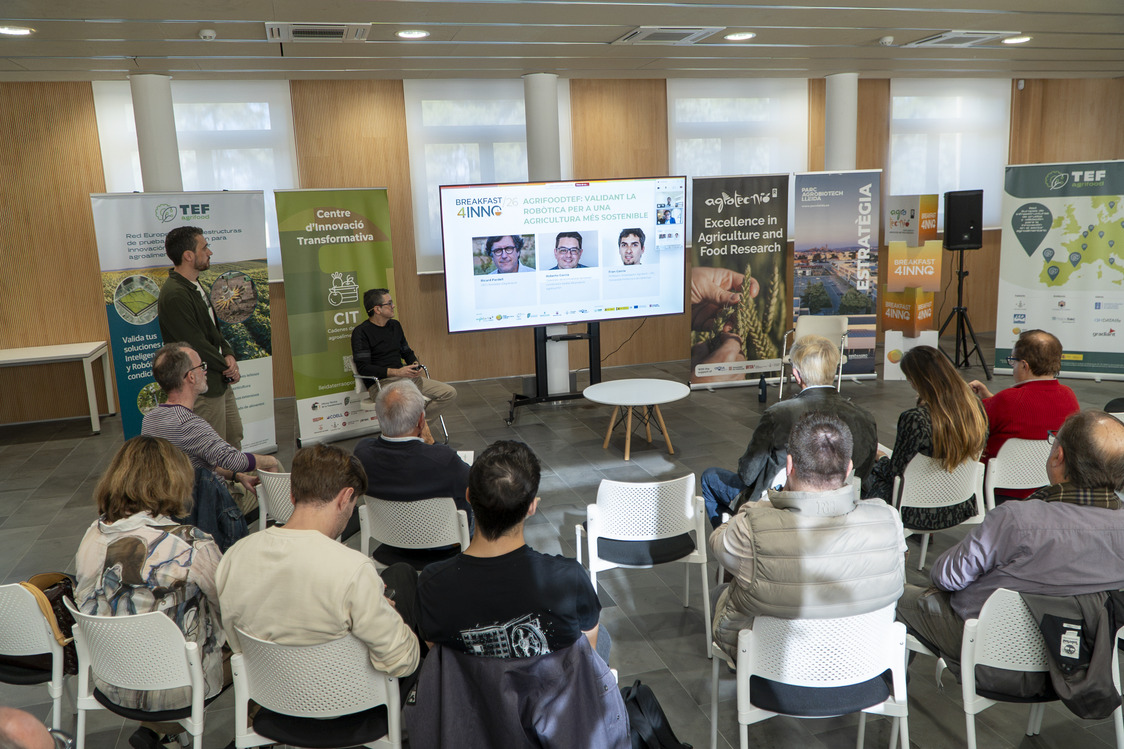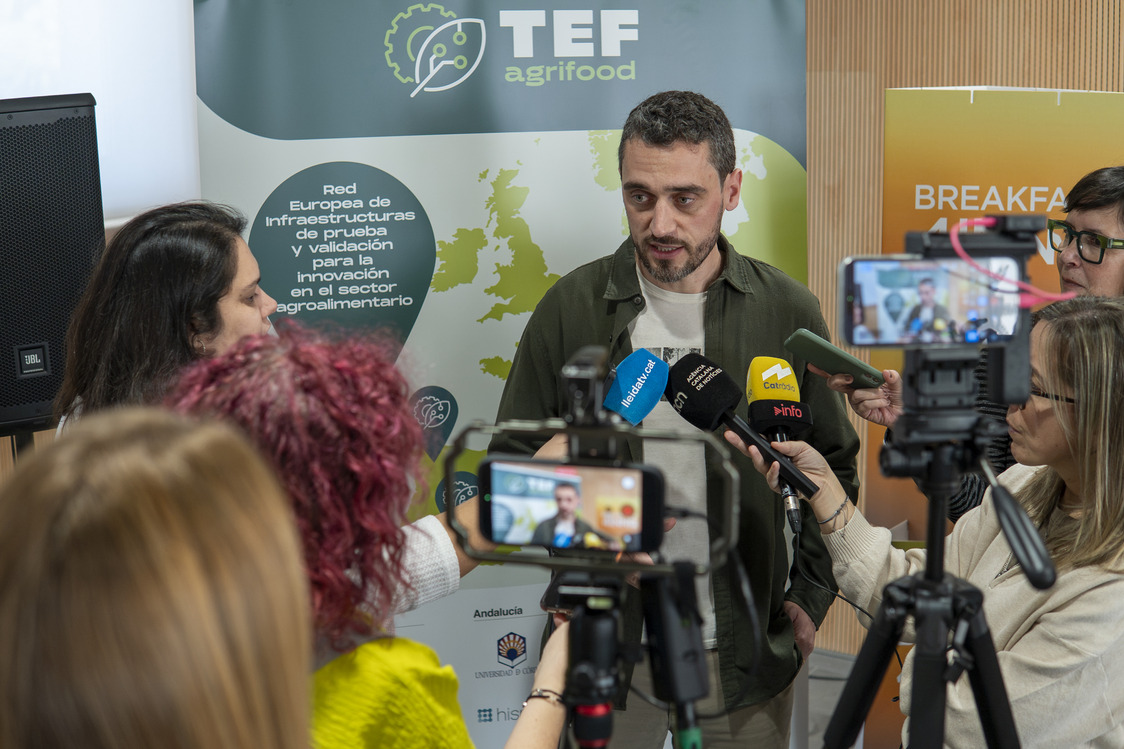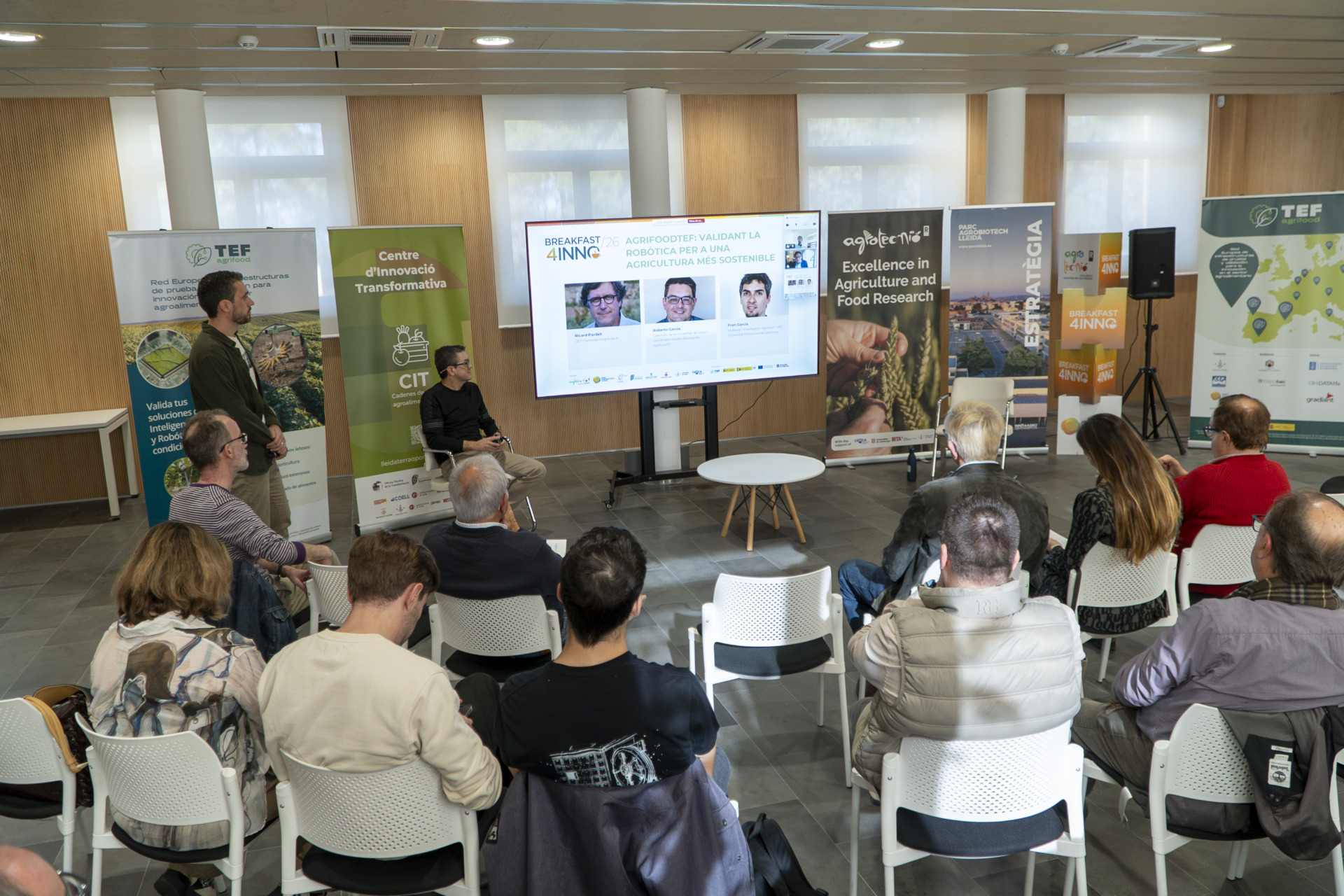
A new BreakfastforInno session introduces this European network, which helps companies test agri-food technologies.
An autonomous robot that uses ultraviolet light to combat fungi has achieved 25% greater effectiveness than organic fungicides in a trial conducted on a zucchini crop. The robot’s capabilities have been tested within the framework of AgrifoodTEF, a network funded by the European Commission and the Spanish Ministry of Agriculture that provides agri-food companies with access to infrastructure and services to test innovative solutions in real-world conditions. The initiative was presented today at a new session of the BreakfastforInno series, organised by Agrotecnio, Parc Agrobiotech Lleida and the Lleida Provincial Council.
The validated technology is a solution developed by Agrikola.AI to control fungal diseases using ultraviolet-C (UVC) light, without applying chemical fungicides. The solution combines Wagus UVC autonomous robots, which carry out treatments in the field, with Nimbus, a cloud-based platform used to plan and monitor them.
In a trial conducted on a zucchini crop under the scientific supervision of the Universitat Politècnica de Catalunya (UPC), the device achieved 25% greater effectiveness than treatments using organic fungicides. The results demonstrated the ability of UVC radiation to control fungal diseases, with all the zucchinis reaching commercial maturity without showing any symptoms. This was explained by Fran García, professor and researcher at EEABB-UPC and a member of the PLAANET research group and the TECNIO AgroTechUPC centre.
Trials have also been conducted on lettuce and onion crops in the Llobregat Delta, Maresme and Lleida. In the case of lettuce, all plants reached commercial maturity and met the quality standards required by the market. According to Ricard Pardell, CEO and founder of Agrikola.AI, the results of the trials on these crops showed effectiveness comparable to that of the organic and conventional treatments used as benchmarks.Through Nimbus, farmers can define their plots, crops and agricultural activities. The system incorporates cameras and sensors that collect data on crops and environmental conditions. Based on this information, it automatically generates the instructions for the robots to carry out.
Regarding economic viability, Pardell presented calculations showing that the potential savings in crop protection treatments could reach up to 77% for zucchini and 73% for lettuce, with the system fully automated. These estimates take into account the robot’s ten-year depreciation period, maintenance, insurance and the variable costs of each application.
AgrifoodTEF, a European network bringing innovation closer to the agri-food sector
The Agrikola.AI robot is an example of the opportunities offered by AgrifoodTEF (European Testing and Experimentation Facilities for Agrifood Innovation), a European network of testing and experimentation facilities that gives companies access to specialised services to assess and validate solutions based on artificial intelligence and robotics.
The aim is to test how these technologies perform in real-world environments and facilitate their transition from advanced stages of development to market deployment. The initiative brings together 37 organisations from ten European countries and has a budget of €60 million for the 2023–2027 period.
Roberto García, professor at the University of Lleida (UdL) and representative of AgrifoodTEF in Spain, explained that the services are primarily aimed at companies developing technologies for the agri-food sector that need to test their performance before bringing them to market. The network enables the validation of solutions at advanced technology readiness levels, ranging from TRL 6 to TRL 8. García also highlighted that small and medium-sized enterprises (SMEs) can benefit from discounts of up to 100% on the cost of validation services.
In Spain, AgrifoodTEF comprises nine partners distributed across three geographical areas: the northwest (Gradiant, Axencia Galega da Calidade Alimentaria and DATAlife), the south (University of Córdoba and Hispatec), and the northeast. In the latter area, the participating partners are the Universitat de Lleida, Agrotecnio, the Centre d’Estudis Porcins and Parc Agrobiotech Lleida, with activities particularly focused on the pig and fruit sectors, as well as agri-food data spaces.
The BreakfastforInno series will hold its final session of 2026 on 10 December, with an event dedicated to aromatic and medicinal plants and their applications in health, food and cosmetics.
AgrifoodTEF is a project co-funded by the European Union’s Digital Europe Programme (Grant Agreement No. 101100622).