The ResOrMa project will conclude with a technical workshop to be held in Bell-lloc d’Urgell on April 27, where the main results of the research focused on improving barley resilience to current agronomic and climate challenges will be presented.
Organised by Agrotecnio, Semillas Batlle, CUPASA and Maltería La Moravia – Grupo Damm, the event will bring together researchers and representatives from the agri-food sector to share advances in areas such as crop performance, pre-harvest sprouting, and grain and malt quality.
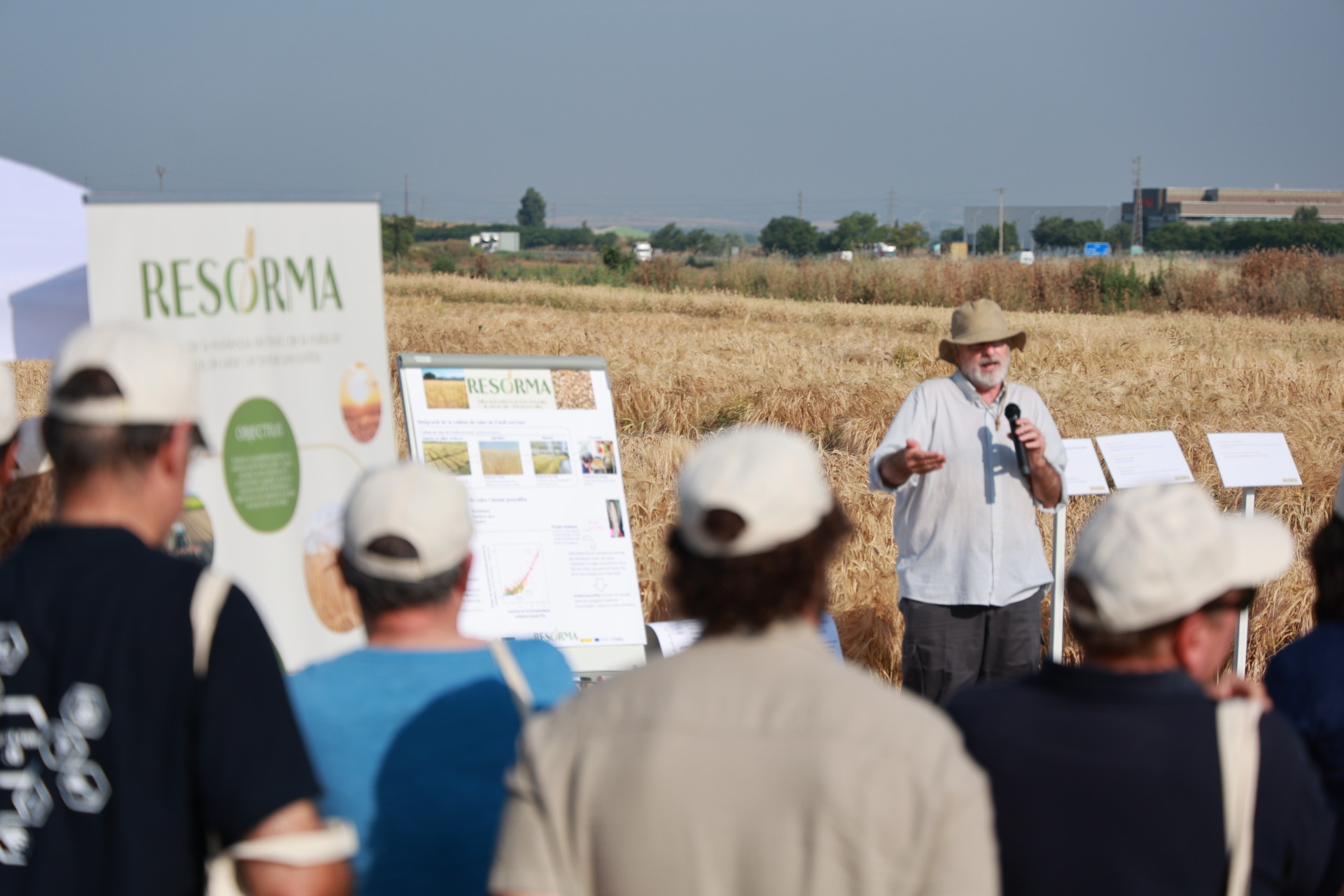
This meeting follows a first workshop held last June, which brought together around forty professionals and researchers from the cereal sector. On that occasion, an informative session was combined with visits to experimental plots, where the first project results were presented, including field data, working hypotheses, and crop adaptation and management strategies.
Predictive models and more resilient varieties
The ReSorMa project (Barley and Malt Resilience) is a research and knowledge transfer initiative aimed at contributing to the adaptation of barley cultivation to the effects of climate change through innovative and field-applicable solutions.
With the support of the Department of Agriculture, Livestock, Fisheries and Food of the Government of Catalonia, the project addresses increasingly frequent phenomena such as heatwaves and pre-harvest sprouting caused by rainfall, which directly affect yield and grain quality.
Among the main results are the impact of climate change on barley and malt production and quality, as well as the identification of more resilient varieties and adapted crop management strategies. These tools will enable both farmers, crop breeding companies and the malting industry to anticipate adverse scenarios and improve campaign planning.
According to Gustavo A. Slafer, lead researcher of the Crop Physiology group at Agrotecnio – Universitat de Lleida and coordinator of Resorma project, “the aim of the project has been to identify opportunities to improve barley resilience without compromising potential yield and to adapt agricultural management to these new conditions.”
The final workshop will also include contributions from participating companies, offering an applied perspective on genetic improvement, crop management, and the impact on grain quality.
Practical information
The workshop will take place on Monday, April 27, at the Bell-lloc d’Urgell Auditorium of the business incubator (carrer Joan Oró,3), from 9:00 to 12:15, and will include technical presentations, results sharing, and a final discussion session among participants.
Participation is free of charge, but prior registration is required via the online form.
Check the programme here.
This activity is part of the CAP Strategic Plan 2023–2027, which promotes initiatives aimed at sustainability and competitiveness in the agri-food sector.