A new Breakfast4Inno brings together science and business to analyse how soybean production in Catalonia can reduce Europe’s dependence on imports and improve agricultural efficiency.
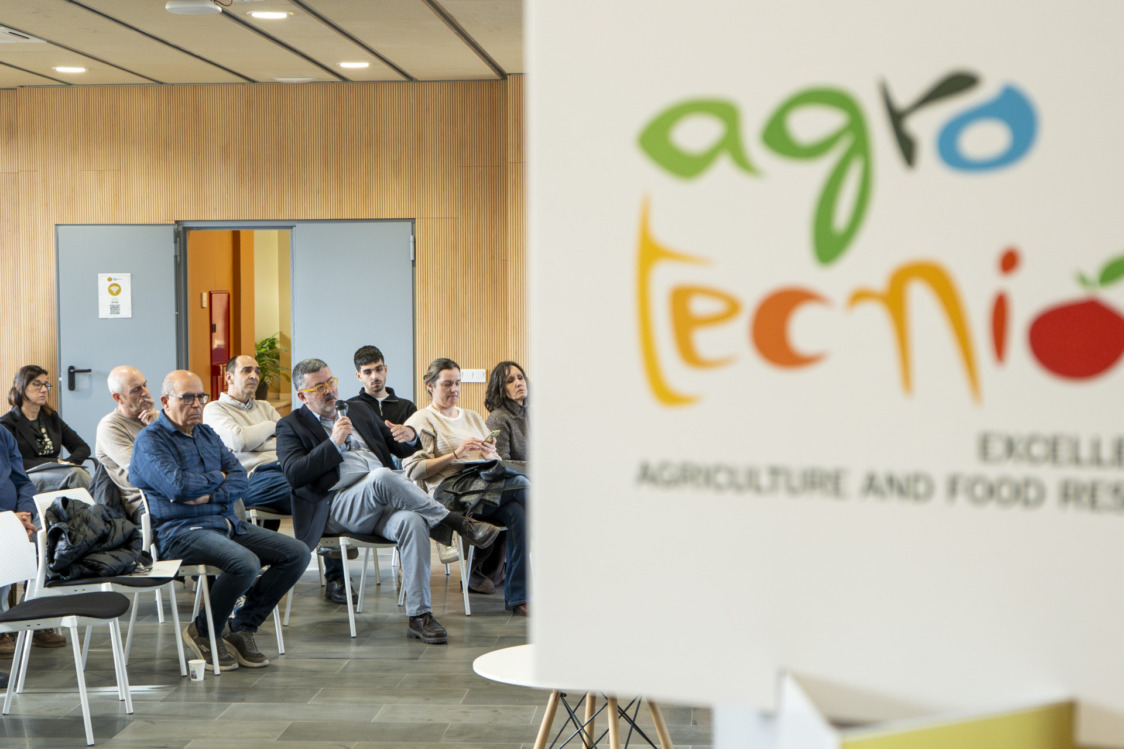
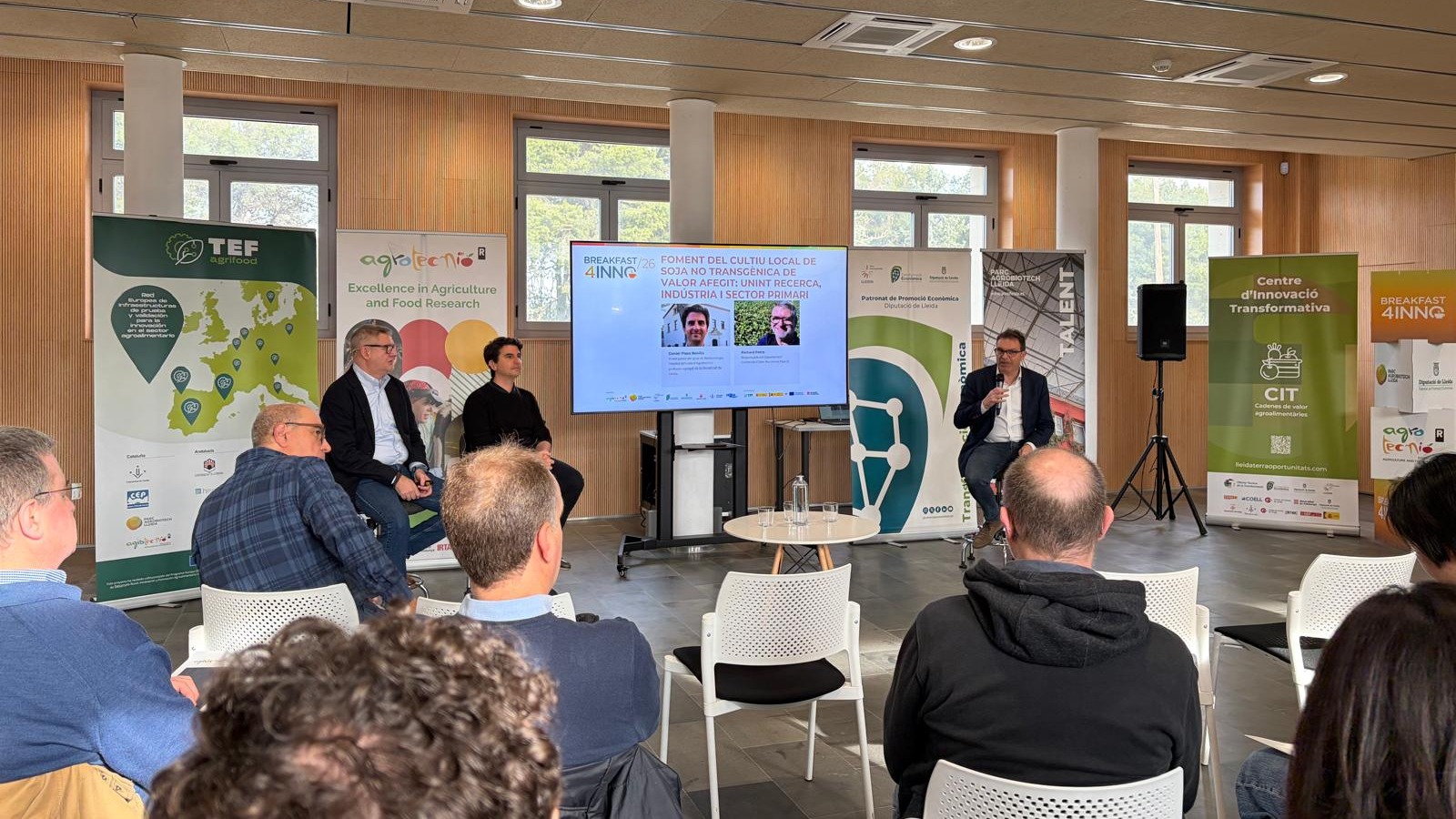
A new edition of the innovation breakfasts today addressed how growing local, non-GM soybeans can improve food sovereignty and reduce European dependence on imports in an international context of political instability and climate change. The event is part of the Breakfast4Inno cycle, organised by Agrotecnio and the Lleida Agrobiotech Park, with the collaboration of the Lleida Provincial Council.
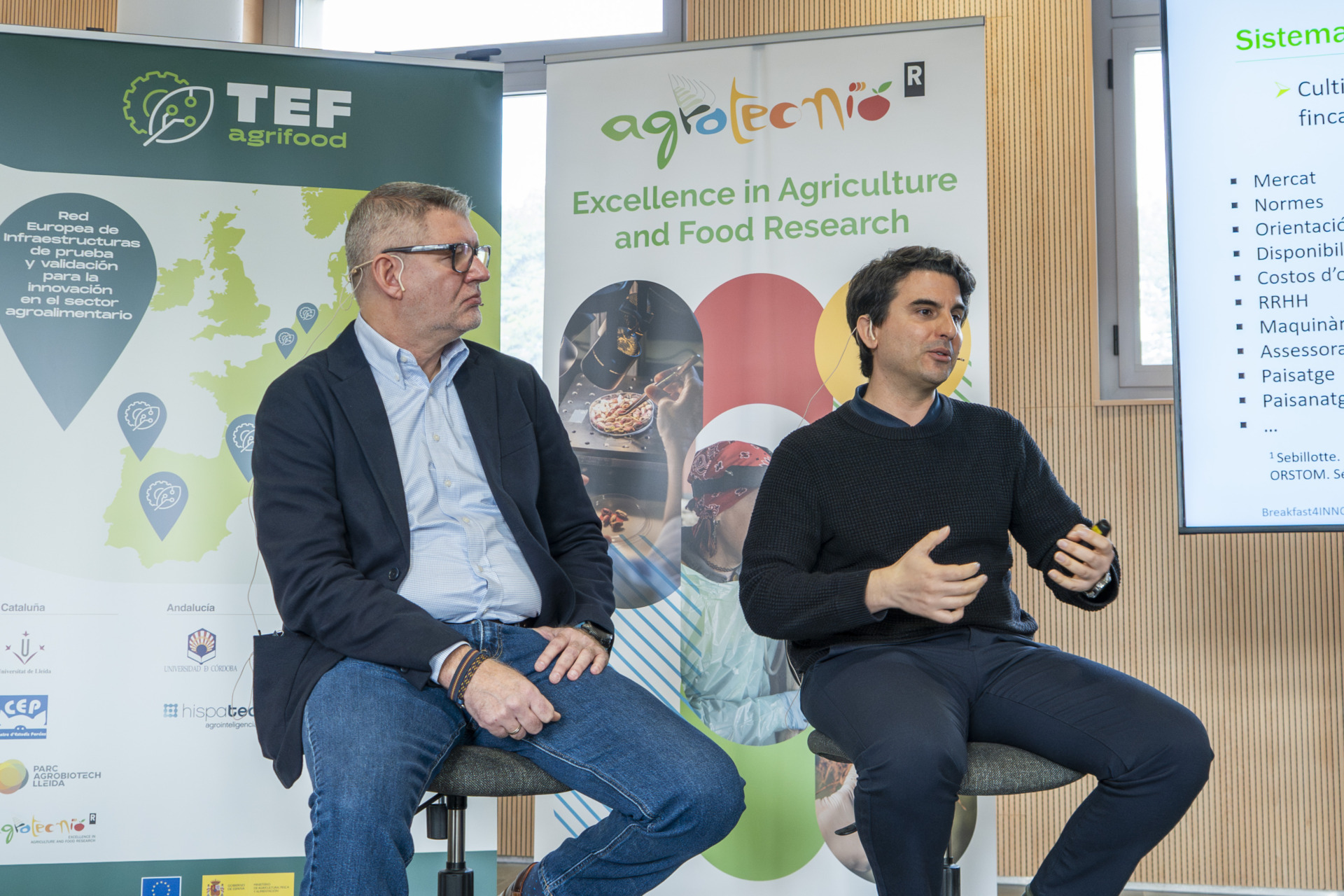
The commercial director of the future Elian Barcelona plant, Richard Petro, presented their business project to boost soybean production in the region. The company currently has a soybean processing plant in the port of Barcelona and is investing in a new annex facility that aims to become the most sustainable and innovative in Europe.
This investment responds to the increase in the consumption of vegetable proteins, especially in the human food market as a functional food, that is, as an ingredient to fortify other foods with protein. According to Petro, Europe only produces 8% of its internal demand and the continent is one of the main importers of this product, mainly purchasing genetically modified soya from the United States, Argentina and Brazil.
In response to this situation, the company is working to create a network of farmers and cooperatives with the aim of expanding soybean cultivation in Spain. In 2025, around 1,000 hectares were already being cultivated, mainly in Catalonia, and the forecast is to reach 3,000 this year and exceed 10,000 by 2030. This year, the company will focus on Catalonia and Aragon, but in the long term it also plans to incorporate farmers from Extremadura, Castile and León, and Navarre.
According to Petro, ‘we want to promote local soybean cultivation by offering farmers guaranteed prices, technical support and stable demand, with the aim of creating a solid value chain. We are committed to KM0 soybeans, which are non-GMO and have high nutritional value, as a crop option that is attractive to producers both agronomically and economically.’
Research to improve local soybean cultivation
Daniel Plaza Bonilla, researcher at Agrotecnio’s Applied Plant Biotechnology group and associate professor at the University of Lleida, has presented the project being developed in collaboration with Elian Barcelona and Cerescamp. This initiative aims to improve the viability and sustainability of soybean cultivation, as well as its role within the farming systems of the Ebro Valley.
Among the main objectives is to increase local soybean protein production per unit area, identifying current obstacles in terms of soil, plant material and cultivation techniques, and in collaboration with local producers on their own farms. Some of the environmental impacts that can be mitigated by integrating soybeans into crop rotations will also be quantified. ‘Soybeans are another piece of the puzzle we call the cropping system: a combination of climate, soil, techniques and crop sequences,’ he notes.
Within this framework, the research team works on monitoring commercial farms to identify agronomic constraints and evaluate management alternatives. In 2025, 10 irrigated farms located in a transect of about 90 kilometres were monitored, with different soil types, rotations and techniques.
The studies analyse various key factors, such as soil characteristics, crop establishment, nutrient availability, yield determination, biological nitrogen fixation and plant health, with the aim of optimising production and improving the sustainability of agricultural systems. By 2026, it is planned to continue monitoring commercial farms, conduct new trials and include studies on herbicides and gas emissions.
Plaza points out that ‘soybeans are an alternative to corn, not a substitute. In fact, growing soybeans benefits corn cultivation, as soybeans have the ability to fix nitrogen in the soil and require less water. To avoid problems in our crops, such as weeds, mites or mycotoxins, we need to diversify, and soybeans are a viable and interesting crop for doing so.’
This Breakfast4inno was moderated by the director of Agrotecnio and professor at the University of Lleida, José Antonio Bonet, who highlighted the importance of connecting research, industry and the primary sector to promote new strategic crops and move towards more sustainable and competitive agricultural systems. The next Breakfast4inno session will be held on 9 April and will focus on food additives for animal feed and for mitigating the impact of greenhouse gases.
More information: